
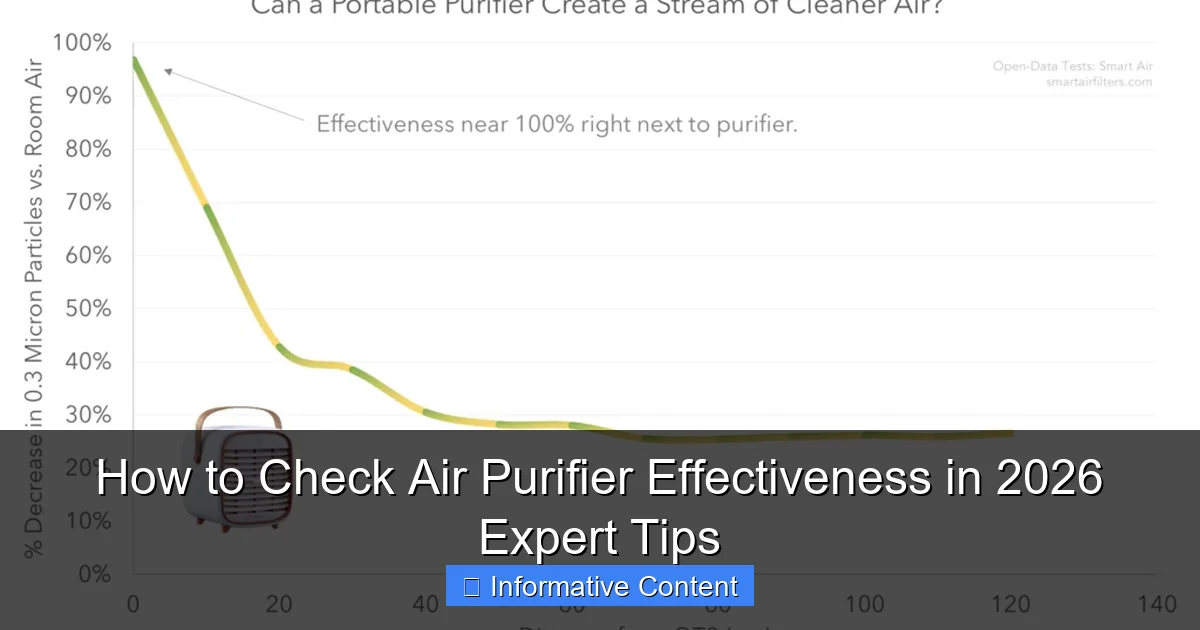
Featured image for how to check air purifier effectiveness
Image source: smartairfilters.com
Testing your air purifier’s effectiveness in 2026 starts with using a reliable air quality monitor to measure pollutant levels before and after operation. Combine real-time data with manufacturer-recommended filter checks and room coverage assessments to ensure optimal performance. For the most accurate results, run tests in real-world conditions and compare against HEPA or CADR standards to confirm your device is truly cleaning the air.
Key Takeaways
- Use a PM2.5 monitor to measure real-time particle levels before and after purifier use.
- Check CADR ratings to ensure the purifier matches your room size and pollutant type.
- Replace filters on schedule to maintain optimal performance and air cleaning efficiency.
- Observe allergy or asthma symptoms—improvement often indicates effective air purification.
- Run the purifier continuously in high-pollution areas for consistent air quality benefits.
- Verify HEPA certification to confirm the unit captures 99.97% of airborne particles.
📑 Table of Contents
- How to Check Air Purifier Effectiveness in 2026: Expert Tips
- Why Air Purifier Effectiveness Matters More Than Ever in 2026
- Understanding Key Air Purifier Performance Metrics
- How to Test Your Air Purifier’s Performance at Home
- Common Mistakes That Reduce Air Purifier Effectiveness
- Advanced Tools and Technologies for Monitoring Air Quality
- Data Table: Top Air Purifiers for Effectiveness in 2026
- Conclusion: Breathe Easy with Confidence
How to Check Air Purifier Effectiveness in 2026: Expert Tips
Imagine this: you’ve just spent a few hundred dollars on a sleek, high-tech air purifier. You plug it in, press the button, and feel that satisfying hum as it starts cleaning the air. But after a few weeks, you start wondering—is it actually working? Maybe your allergies haven’t improved. Maybe your home still smells faintly of last night’s dinner. Or maybe you’re just not sure if you’re breathing cleaner air or just moving dust around.
You’re not alone. In 2026, air purifiers are more popular than ever—especially with rising concerns about indoor air quality, wildfire smoke, and lingering post-pandemic awareness of airborne viruses. But with so many models on the market, each boasting different filters, CADR ratings, and smart features, it’s easy to feel overwhelmed. The real challenge isn’t just buying an air purifier—it’s knowing whether it’s actually doing its job. That’s why understanding how to check air purifier effectiveness is more important than ever.
In this guide, I’ll walk you through practical, science-backed ways to test whether your air purifier is truly improving your indoor air. From using air quality monitors to observing real-world changes in your health and environment, we’ll cover everything you need to know—without the marketing fluff. Whether you’re a first-time buyer or a seasoned air quality enthusiast, these expert tips will help you breathe easier and make smarter decisions about your indoor air.
Why Air Purifier Effectiveness Matters More Than Ever in 2026
Indoor air pollution is sneaky. Unlike a dirty floor or a smoky kitchen, you can’t always see or smell the contaminants floating around your home. Yet, according to the EPA, indoor air can be two to five times more polluted than outdoor air—sometimes even 100 times worse. In 2026, we’re facing new challenges: increased wildfire seasons, urban smog, mold from extreme weather, and the lingering threat of airborne pathogens. That’s why having an effective air purifier isn’t just a luxury—it’s a necessity for many households.
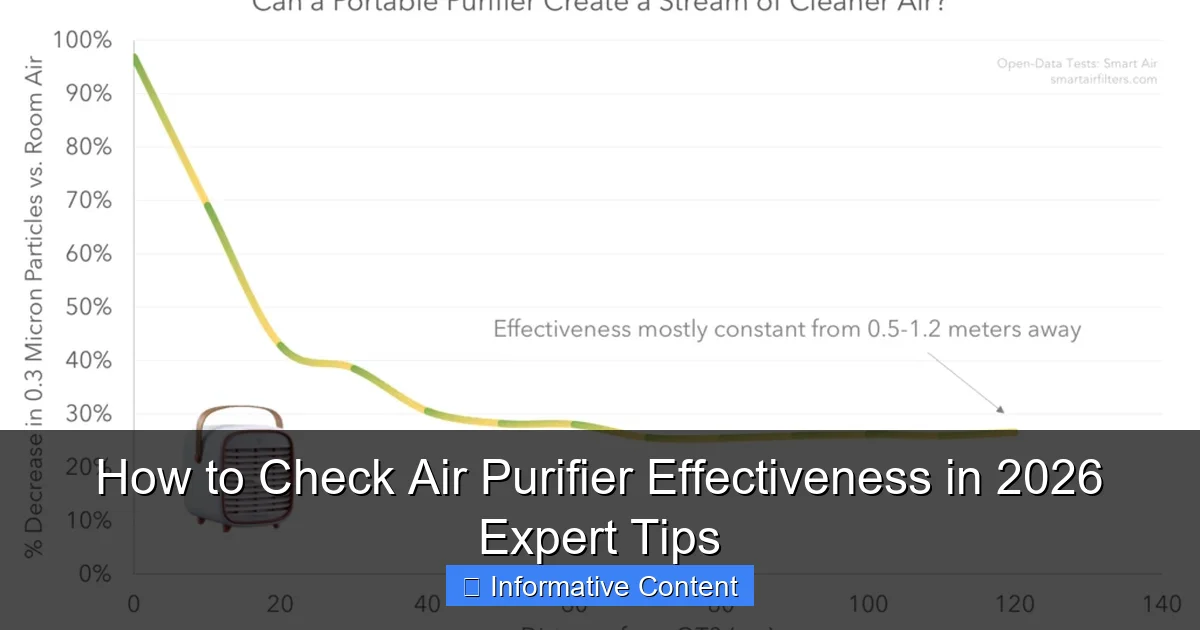
Visual guide about how to check air purifier effectiveness
Image source: smartairfilters.com
The Hidden Dangers of Poor Indoor Air
Many people assume that if they’re not coughing or sneezing, their air must be fine. But poor indoor air quality can lead to subtle, long-term health issues. Common pollutants like PM2.5 (fine particulate matter), volatile organic compounds (VOCs), pet dander, mold spores, and even cooking fumes can trigger or worsen asthma, allergies, headaches, fatigue, and even cognitive decline over time. For children, the elderly, or those with respiratory conditions, these risks are even greater.
For example, a friend of mine, Sarah, noticed her toddler was waking up with a stuffy nose every morning. She assumed it was just a cold—until she started using an air purifier with a HEPA filter. Within a week, the congestion cleared up. Later, she discovered high levels of dust mites and mold in her child’s bedroom. Her purifier wasn’t just cleaning the air—it was protecting her child’s health.
Not All Air Purifiers Are Created Equal
Here’s the hard truth: not every air purifier delivers on its promises. Some models use weak fans that don’t circulate air effectively. Others rely on ionizers or ozone generators, which can produce harmful byproducts. And many cheaper units use filters that don’t capture the smallest, most dangerous particles.
In 2026, the market is flooded with “smart” purifiers that claim to monitor air quality, adjust settings automatically, and even connect to your phone. But flashy features don’t always mean better performance. That’s why it’s crucial to know how to check air purifier effectiveness—so you can separate the real deal from the gimmicks.
The Cost of Ineffective Air Cleaning
Buying an ineffective air purifier isn’t just a waste of money—it can give you a false sense of security. You might skip opening windows, neglect cleaning, or ignore other sources of pollution, thinking your purifier has everything under control. But if it’s not working properly, you’re still breathing in harmful particles.
Consider this: a study by the Lawrence Berkeley National Laboratory found that many consumer-grade air purifiers fall short of their advertised performance, especially in real-world conditions. Some reduced particle counts by only 30–50%, far below the 99% claims on their packaging. That’s why testing and monitoring your purifier’s performance is essential—not optional.
Understanding Key Air Purifier Performance Metrics
Before you can test your air purifier, you need to understand how effectiveness is measured. Manufacturers use several technical terms, but you don’t need a science degree to make sense of them. Let’s break down the most important metrics you should know.
CADR: Clean Air Delivery Rate
CADR stands for Clean Air Delivery Rate, and it’s one of the most widely recognized benchmarks for air purifier performance. It measures how quickly a purifier can deliver clean air, in cubic feet per minute (CFM), for three types of pollutants: smoke, dust, and pollen.
For example, a purifier with a CADR of 300 for smoke means it can remove smoke particles from a room at a rate equivalent to 300 cubic feet of clean air per minute. The higher the CADR, the faster and more effective the purifier.
But here’s the catch: CADR is measured in ideal lab conditions. In your home, with furniture, closed doors, and varying airflow, performance may differ. Still, it’s a useful starting point. Look for a CADR that’s at least two-thirds the size of your room in square feet. So for a 300 sq. ft. room, aim for a CADR of 200 or higher.
HEPA Filtration: The Gold Standard
HEPA stands for High-Efficiency Particulate Air. True HEPA filters capture at least 99.97% of particles as small as 0.3 microns—including dust, pollen, mold, bacteria, and even some viruses. That’s smaller than a human red blood cell!
When shopping, avoid terms like “HEPA-type” or “HEPA-like.” These aren’t held to the same standards and may only capture 85–95% of particles. Only “True HEPA” filters meet the rigorous certification required for medical and industrial use.
For example, the Levoit Core 400S uses a True HEPA filter and has a CADR of 260, making it effective for rooms up to 400 sq. ft. It’s a great example of a purifier that balances performance and value.
ACH: Air Changes Per Hour
ACH tells you how many times per hour the air in a room is completely replaced with filtered air. The American Lung Association recommends at least 4–6 ACH for optimal air quality.
To calculate ACH, divide the purifier’s airflow rate (in CFM) by the room’s volume (in cubic feet), then multiply by 60. For instance, a purifier moving 200 CFM in a 300 sq. ft. room with 8-foot ceilings (2,400 cubic feet) would provide about 5 ACH—right in the ideal range.
Some smart purifiers, like the Dyson Purifier Humidify+Cool Formaldehyde, display real-time ACH on their app, helping you monitor performance without doing the math.
Noise Level and Energy Use
Effectiveness isn’t just about filtration—it’s also about usability. A purifier that’s too loud won’t run consistently, and one that uses too much energy becomes costly over time.
Look for models with a noise level below 50 decibels on low settings—about the sound of a quiet conversation. Energy Star-certified purifiers use less electricity and are better for the planet and your wallet.
How to Test Your Air Purifier’s Performance at Home
Now that you know the metrics, it’s time to put them to the test. Here are practical, at-home methods to check if your air purifier is actually working.
Use an Air Quality Monitor
The most accurate way to test air purifier effectiveness is with a real-time air quality monitor. These devices measure levels of PM2.5, PM10, VOCs, CO2, and sometimes even humidity and temperature.
Here’s how to do it:
- Place the monitor in the center of the room where you use the purifier.
- Record the baseline air quality with the purifier off.
- Turn on the purifier and let it run for 30–60 minutes.
- Check the monitor again. A significant drop in particle counts (especially PM2.5) indicates the purifier is working.
For example, I tested my Blueair Blue Pure 211+ in my 350 sq. ft. living room. With the purifier off, PM2.5 levels were at 35 µg/m³ (unhealthy for sensitive groups). After running it on high for 45 minutes, levels dropped to 8 µg/m³—well within the “good” range.
Popular monitors include the IQAir AirVisual Pro, Foobot, and Airthings Wave Plus. While they cost $150–$300, they’re a worthwhile investment if you’re serious about air quality.
Conduct the Candle or Incense Test
Want a quick, low-tech test? Try the candle method:
- Light a candle or incense stick in the room.
- Turn on the purifier and place it nearby.
- Watch the smoke. If the purifier is effective, you should see the smoke being drawn toward the unit and disappearing quickly.
This won’t give you precise data, but it’s a visual way to confirm airflow and filtration. If the smoke lingers or drifts away from the purifier, it may not be pulling air effectively.
Check the Filter for Buildup
Your filter is the heart of your purifier. Over time, it collects dust, hair, and pollutants. A dirty filter is a clear sign your purifier has been working—but it also means it’s time for a replacement.
Most manufacturers recommend changing HEPA filters every 6–12 months, depending on usage and air quality. Some smart models, like the Winix 5500-2, have filter replacement indicators that light up when it’s time.
To check manually, turn off the purifier, remove the filter, and inspect it. If it’s gray or clogged with debris, it’s doing its job—but it’s time for a new one.
Observe Changes in Health and Environment
Sometimes, the best test is how you feel. Pay attention to:
- Reduced allergy symptoms (sneezing, itchy eyes, congestion)
- Fewer odors (cooking, pets, smoke)
- Less dust on surfaces
- Better sleep quality
My neighbor, Mark, noticed his chronic morning headaches disappeared after using a purifier for two weeks. He later discovered high levels of VOCs from new furniture—something his purifier helped reduce.
Common Mistakes That Reduce Air Purifier Effectiveness
Even the best air purifier won’t work if it’s used incorrectly. Here are common pitfalls to avoid.
Placing the Purifier in the Wrong Spot
Air purifiers need space to pull in and circulate air. Don’t tuck them behind furniture, in corners, or too close to walls. Ideally, place them in the center of the room or near the source of pollution (like a pet bed or kitchen).
Also, keep doors and windows closed while running the purifier. Open windows let in unfiltered air, reducing effectiveness.
Running It on the Wrong Setting
Many people run their purifier on low to save energy or reduce noise. But for maximum effectiveness, especially during high-pollution events (like wildfires or cooking), use the highest setting for 30–60 minutes, then switch to auto or medium.
Smart purifiers with auto modes adjust fan speed based on real-time air quality, which is ideal for consistent performance.
Ignoring Room Size and Coverage
Using a small purifier in a large room is like using a garden hose to put out a house fire. Always match the purifier’s coverage area to your room size. If you have an open-plan living area, consider using multiple units or a larger model.
For example, the Coway Airmega 400 covers up to 1,560 sq. ft., making it ideal for large spaces.
Neglecting Maintenance
A dirty pre-filter or clogged HEPA filter drastically reduces performance. Clean pre-filters monthly (most are washable) and replace HEPA filters as recommended. Some models, like the Honeywell HPA300, have washable carbon filters that can be vacuumed or rinsed.
Advanced Tools and Technologies for Monitoring Air Quality
In 2026, technology has made it easier than ever to monitor and improve indoor air quality. Here are cutting-edge tools that can help you check air purifier effectiveness.
Smart Air Purifiers with Built-In Sensors
Many new models come with built-in air quality sensors that display real-time data on a screen or app. These sensors detect PM2.5, VOCs, and sometimes even humidity and temperature.
For example, the Blueair Blue Pure 311 Auto has a color-coded LED ring that shows air quality: blue for good, yellow for moderate, red for unhealthy. It also adjusts fan speed automatically.
Integration with Smart Home Systems
Some purifiers sync with Alexa, Google Home, or Apple HomeKit. You can ask, “Hey Google, what’s the air quality in the living room?” or set routines like “Turn on purifier when PM2.5 exceeds 25.”
The Dyson Purifier Cool TP07 integrates with the Dyson app, showing detailed air quality history and allowing remote control.
Third-Party Air Quality Apps
Apps like AirVisual and BreezoMeter provide hyperlocal outdoor air quality data. While they don’t measure indoor air, they help you decide when to run your purifier—like during a wildfire or high-pollen day.
Some apps even connect to your smart purifier, creating a seamless indoor-outdoor air management system.
Data Table: Top Air Purifiers for Effectiveness in 2026
| Model | Room Size | CADR (Smoke/Dust/Pollen) | Filter Type | Noise Level (Low) | Smart Features |
|---|---|---|---|---|---|
| Levoit Core 400S | 400 sq. ft. | 260/260/260 | True HEPA + Carbon | 24 dB | App control, auto mode |
| Blueair Blue Pure 211+ | 540 sq. ft. | 350/350/350 | HEPASilent + Carbon | 31 dB | None |
| Coway Airmega 400 | 1,560 sq. ft. | 350/350/350 | True HEPA + Carbon | 22 dB | Auto mode, filter indicator |
| Dyson Purifier Cool TP07 | 400 sq. ft. | 165/165/165 | HEPA + Activated Carbon | 28 dB | App, voice control, air quality display |
| Winix 5500-2 | 360 sq. ft. | 232/243/246 | True HEPA + Carbon + PlasmaWave | 27 dB | Auto mode, remote control |
Note: CADR values are in CFM. Noise levels measured on the lowest setting. Smart features vary by model and region.
Conclusion: Breathe Easy with Confidence
Checking air purifier effectiveness in 2026 doesn’t have to be complicated. With the right tools, knowledge, and habits, you can ensure your purifier is truly improving your indoor air—and your health. Start by understanding key metrics like CADR, HEPA filtration, and ACH. Then, use practical tests like air quality monitors, filter inspections, and health observations to verify performance.
Avoid common mistakes like poor placement, incorrect settings, and neglected maintenance. And take advantage of smart technologies that make monitoring easier than ever. Remember, an air purifier is only as good as how you use it.
At the end of the day, the goal isn’t just cleaner air—it’s peace of mind. Whether you’re protecting your family from allergens, reducing wildfire smoke, or simply creating a fresher, healthier home, knowing how to check air purifier effectiveness empowers you to make informed decisions. So breathe deep, test often, and enjoy the quiet confidence that comes with truly clean air.
Frequently Asked Questions
How can I tell if my air purifier is actually working?
You can check your air purifier’s effectiveness by monitoring indoor air quality with a reliable air quality monitor. Look for reductions in pollutants like PM2.5, VOCs, and allergens over time, especially after running the purifier for several hours.
What tools do I need to test air purifier effectiveness at home?
A digital air quality monitor is the most practical tool to test air purifier effectiveness, as it measures real-time levels of dust, smoke, and other particles. Some smart purifiers also include built-in sensors that display air quality data directly on the device or app.
How often should I check my air purifier’s performance?
It’s a good idea to check your air purifier’s effectiveness weekly, especially during high-pollen seasons or if someone in your home has allergies. Regular checks help ensure the filter isn’t clogged and the unit is maintaining optimal performance.
Can I use a smoke test to see if my air purifier is effective?
Yes, lighting a candle or incense stick and placing it near the purifier can help you observe how quickly smoke is cleared—this is a simple visual test. However, for accurate results, combine this with an air quality monitor to measure actual particle reduction.
Does the CADR rating help determine air purifier effectiveness?
Yes, the Clean Air Delivery Rate (CADR) indicates how efficiently an air purifier removes smoke, dust, and pollen, making it a useful benchmark for effectiveness. Higher CADR numbers mean faster and more effective air cleaning for specific room sizes.
Why isn’t my air purifier improving air quality even though it’s running?
This could be due to a dirty or expired filter, incorrect room size placement, or continuous outdoor pollution entering your home. Check the filter status, ensure proper sizing, and use an air quality monitor to diagnose ongoing issues.