

Featured image for how to choose air purifier room size
Image source: aircaring.com
Choosing the right air purifier room size in 2026 starts with matching the unit’s Clean Air Delivery Rate (CADR) to your room’s square footage for maximum efficiency. Look for models with coverage ratings that meet or exceed your space, and consider ceiling height and air exchange rates for optimal performance. An undersized purifier won’t clean effectively, while an oversized one wastes energy—precision sizing ensures cleaner air and better value.
Key Takeaways
- Measure your room: Calculate square footage accurately for proper purifier sizing.
- Check CADR ratings: Choose a purifier with CADR matching your room size.
- Consider ceiling height: Taller rooms may need higher-capacity units.
- Account for air changes: Aim for 4-6 air changes per hour for best results.
- Prioritize ACH over size: Higher air change rates improve air quality faster.
- Use multiple units if needed: Large or open spaces may require more than one purifier.
📑 Table of Contents
- How to Choose Air Purifier Room Size in 2026 for Best Results
- Why Room Size Matters More Than You Think
- Understanding Air Purifier Ratings: CADR and Room Coverage
- How to Measure Your Room Accurately
- Special Considerations for Different Rooms and Lifestyles
- Smart Features and Future-Proofing Your Choice in 2026
- Final Tips and Common Mistakes to Avoid
- Conclusion: Breathe Easy with the Right Choice
How to Choose Air Purifier Room Size in 2026 for Best Results
Let’s be honest—choosing an air purifier can feel like trying to pick the right coffee blend at a fancy café. There are so many options, and you’re not entirely sure what half the terms mean. But here’s the thing: picking the right air purifier isn’t just about fancy filters or sleek designs. It’s about one crucial factor that often gets overlooked—room size.
If you’ve ever bought an air purifier only to find it’s either too weak to clean your living room or so loud it sounds like a jet engine in your bedroom, you’re not alone. I made that mistake once. I bought a compact model for my 400-square-foot apartment, thinking it would do the trick. Spoiler alert: it didn’t. The air still felt stuffy, and my allergies flared up every spring. That’s when I realized—size matters. Not just the physical size of the unit, but how well it matches the space it’s meant to clean.
In 2026, air purifiers have evolved. They’re smarter, quieter, and more efficient than ever. But with all the advancements, the core rule remains the same: match your air purifier to your room size. Whether you’re dealing with pet dander, wildfire smoke, or just want fresher air while you sleep, choosing the right-sized unit is the first step toward cleaner, healthier air. This guide will walk you through everything you need to know—no technical jargon, no fluff—just practical advice to help you make the best choice for your home.
Why Room Size Matters More Than You Think
Imagine trying to water a whole garden with a single watering can. It might work for a small patch of flowers, but your tomatoes and herbs? They’ll be left thirsty. The same logic applies to air purifiers. If your unit is too small for the room, it simply can’t circulate and clean the air effectively. You’ll end up with stale air, lingering odors, and allergens still floating around—defeating the whole purpose of buying one in the first place.
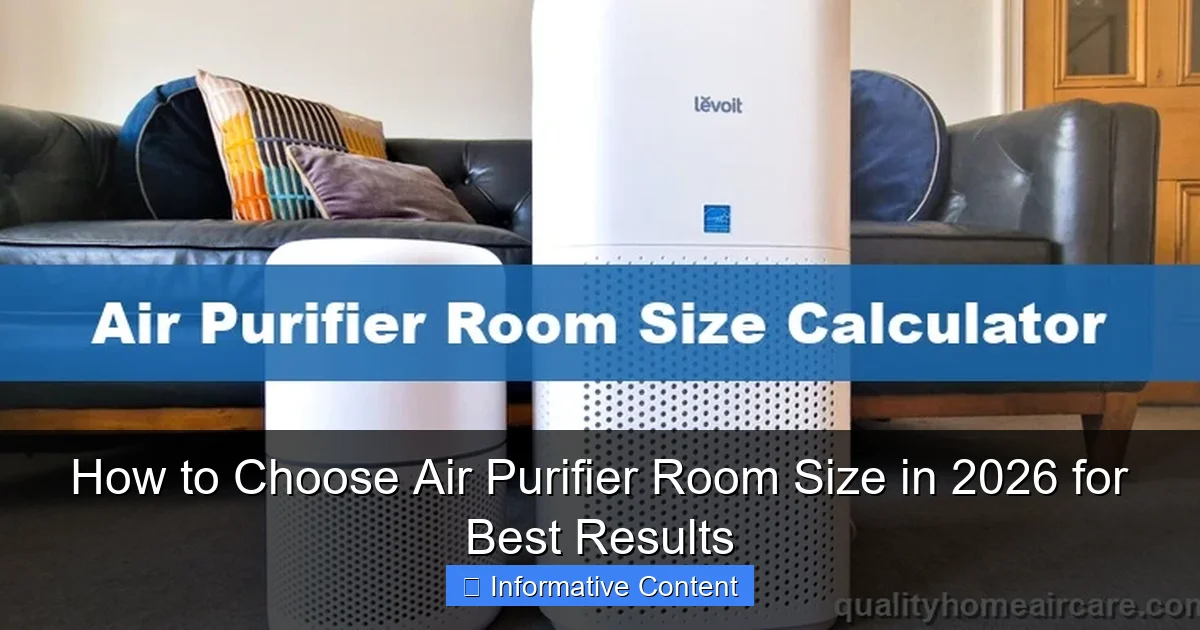
Visual guide about how to choose air purifier room size
Image source: qualityhomeaircare.com
The Science Behind Air Changes Per Hour (ACH)
Air purifiers work by pulling in dirty air, filtering out pollutants, and releasing clean air back into the room. But how often does that happen? That’s where Air Changes Per Hour (ACH) comes in. ACH measures how many times the air in a room is completely filtered in one hour. For example, an ACH of 4 means the air is cleaned four times every hour.
Most experts recommend an ACH of at least 4 for general use, and 6 or higher for people with allergies, asthma, or during high-pollution events like wildfire season. But here’s the catch: ACH depends heavily on room size. A purifier that delivers 4 ACH in a 200-square-foot bedroom might only manage 1 ACH in a 600-square-foot living room. That’s why matching your purifier’s capacity to your room size is non-negotiable.
What Happens When You Choose the Wrong Size?
Using an undersized air purifier is like bringing a squirt gun to a house fire. It might make you feel like you’re doing something, but it won’t solve the problem. Here’s what can go wrong:
- Reduced air quality: Pollutants like dust, pollen, and smoke linger longer, especially in larger spaces.
- Increased noise: Many purifiers ramp up fan speed to compensate, making them louder and less pleasant to live with.
- Higher energy bills: Running a small unit at maximum speed 24/7 uses more electricity than a properly sized one running efficiently.
- Shorter lifespan: Overworking the motor and filters can lead to premature wear and tear.
On the flip side, an oversized purifier isn’t always better. While it will clean the air quickly, it might cycle on and off too frequently, leading to inconsistent performance. Plus, you’re paying more for a feature set you don’t need. The sweet spot? A purifier that’s just right for your space.
Understanding Air Purifier Ratings: CADR and Room Coverage
When you start shopping for air purifiers, you’ll come across two key numbers: CADR and room coverage. These aren’t just marketing fluff—they’re your best friends when it comes to choosing the right size. Let’s break them down.
What Is CADR and Why Should You Care?
CADR stands for Clean Air Delivery Rate. It’s a standardized measurement developed by the Association of Home Appliance Manufacturers (AHAM) that tells you how effectively an air purifier removes three common pollutants: dust, pollen, and smoke. The higher the CADR number, the faster the purifier cleans the air.
For example, a purifier with a CADR of 200 for dust means it can deliver 200 cubic feet of clean air per minute. But here’s the important part: CADR is measured in a controlled test environment, usually a 1,000-cubic-foot room. So, if your room is larger, that same CADR won’t perform as well.
To find the right CADR for your room, use this simple rule of thumb: Your CADR should be at least two-thirds the square footage of your room. So for a 300-square-foot room, aim for a CADR of 200 or higher. This ensures the purifier can handle the volume of air effectively.
Room Coverage: The Manufacturer’s Promise
Most air purifiers list a “recommended room size” or “coverage area” on the box or product page. This is usually based on the CADR and assumes standard ceiling heights (around 8 feet). For instance, a purifier rated for “up to 500 square feet” is designed to clean a room of that size with 4 ACH.
But here’s a tip: Don’t take that number at face value. Manufacturers often test under ideal conditions—no furniture, no pets, no open windows. In real life, your room has obstacles that block airflow, like couches, bookshelves, and curtains. So, it’s wise to choose a purifier rated for a room larger than yours. If you have a 400-square-foot living room, go for one rated for 500–600 square feet. This gives you a buffer for real-world conditions.
Real-World Example: Matching CADR to Your Space
Let’s say you have a 350-square-foot bedroom and suffer from seasonal allergies. You want strong pollen filtration. Here’s how to choose:
- Calculate minimum CADR: 350 × 0.67 ≈ 235
- Look for a purifier with a pollen CADR of at least 240
- Check that it’s rated for 400+ square feet to account for furniture and airflow
This ensures the purifier can handle your room size and deliver the air changes you need for relief.
How to Measure Your Room Accurately
You can’t choose the right air purifier if you don’t know your room size. Sounds simple, right? But many people guess or use outdated floor plans. Let’s make sure you get this right.
Step-by-Step: Measuring Square Footage
Grab a tape measure and a notepad. Here’s how to do it:
- Measure the length and width of your room in feet. For irregular shapes, break the room into rectangles and measure each section.
- Multiply length × width to get the square footage. For example, a 12 ft × 15 ft room = 180 sq ft.
- Account for ceiling height if it’s higher than 8 feet. Multiply square footage by (ceiling height ÷ 8). So a 180 sq ft room with 10 ft ceilings = 180 × (10 ÷ 8) = 225 cubic feet equivalent.
- Adjust for open spaces. If your living room flows into a dining area, treat it as one larger space. Air purifiers work best in enclosed areas.
Pro tip: Use a laser distance measurer or a smartphone app like MagicPlan or RoomScan to make this faster and more accurate.
Common Room Sizes and Purifier Recommendations
Here’s a quick reference to help you match room size to purifier capacity:
| Room Size (sq ft) | Recommended CADR | Purifier Coverage Rating | Example Use Case |
|---|---|---|---|
| 100–200 | 67–134 | 200–300 sq ft | Small bedroom, home office |
| 200–300 | 134–200 | 300–400 sq ft | Standard bedroom, nursery |
| 300–400 | 200–267 | 400–500 sq ft | Living room, master bedroom |
| 400–500 | 267–333 | 500–600 sq ft | Open-concept living area |
| 500+ | 333+ | 600+ sq ft | Large loft, basement, studio |
Remember, these are guidelines. Always consider your specific needs—like pets, smoking, or high pollution levels—when choosing.
Special Considerations for Different Rooms and Lifestyles
Not all rooms are created equal. A purifier that works perfectly in your bedroom might not cut it in the kitchen or basement. Your lifestyle also plays a big role. Let’s explore how to tailor your choice.
Bedrooms: Quiet and Consistent
You spend a third of your life in the bedroom, so air quality here is crucial—especially if you have allergies or asthma. But you also need quiet operation. Look for a purifier with a low-decibel sleep mode (under 30 dB) and a coverage rating that matches your room size.
Example: A 250-square-foot bedroom with a king bed and dresser needs a purifier rated for at least 300–350 square feet. Bonus points if it has a timer or auto mode that adjusts based on air quality.
Living Rooms: Open Spaces and High Traffic
Living rooms are often the largest and most open spaces in a home. They’re also where pollutants accumulate—dust from shoes, pet dander, cooking fumes, and outdoor air that sneaks in through windows. For these areas, prioritize high CADR and strong airflow.
If your living room is 450 square feet and opens into a kitchen, choose a purifier rated for 600+ square feet. Models with 360-degree air intake and multiple fan speeds work best here.
Kitchens and Basements: Tackling Odors and Moisture
Kitchens produce smoke, grease, and strong cooking odors. Basements often have mold spores and musty smells. For these spaces, look for purifiers with activated carbon filters in addition to HEPA. Carbon filters absorb odors and volatile organic compounds (VOCs).
Even if your kitchen is only 150 square feet, a purifier rated for 200–250 square feet with a carbon filter will perform better than a basic model.
Homes with Pets, Smokers, or Allergy Sufferers
If you have pets, you’re dealing with fur, dander, and sometimes litter box odors. Smokers introduce fine particles and lingering smoke. Allergy sufferers need maximum filtration.
In these cases, oversize your purifier. Go one or two sizes up from your room’s square footage. Also, choose models with true HEPA filters (not “HEPA-type”) and consider units with washable pre-filters to catch large particles before they clog the main filter.
Smart Features and Future-Proofing Your Choice in 2026
Air purifiers in 2026 aren’t just boxes with filters—they’re smart devices that adapt to your environment. But even with all the tech, room size remains the foundation. Here’s how to future-proof your purchase.
Auto Mode and Air Quality Sensors
Many modern purifiers come with built-in sensors that detect pollutants and adjust fan speed automatically. This is great for maintaining clean air without constant manual adjustments. But these features only work well if the purifier is properly sized. An undersized unit will run at max speed all the time, defeating the purpose of “auto” mode.
Look for models with real-time air quality displays (like a color-coded LED) and app connectivity. This lets you monitor performance and ensure it’s actually cleaning your space effectively.
Energy Efficiency and Long-Term Costs
A properly sized purifier uses less energy because it doesn’t have to work overtime. Check the Energy Star rating and annual operating cost estimate. A 300-square-foot purifier running 12 hours a day might cost $15–$25 per year in electricity—far less than a smaller unit running 24/7 at high speed.
Also, consider filter replacement costs. Larger purifiers often have bigger filters that last longer, reducing long-term expenses.
Noise Levels and Daily Use
Even the best purifier is useless if you turn it off because it’s too loud. Check the decibel (dB) rating at different fan speeds. For bedrooms, aim for under 40 dB on low. For living areas, 50 dB is acceptable.
Some 2026 models use brushless DC motors for quieter, more efficient operation. These are worth the investment if noise is a concern.
Final Tips and Common Mistakes to Avoid
Before you click “buy,” let’s recap the most important lessons and pitfalls to avoid.
Do: Match Purifier to Room, Not Just Square Footage
Yes, square footage matters—but so do ceiling height, furniture layout, and pollution sources. A 300-square-foot room with vaulted ceilings and two dogs needs a stronger purifier than a 300-square-foot room with low ceilings and no pets.
Don’t: Rely Solely on Manufacturer Claims
Phrases like “cleans up to 1,000 square feet” are often based on ideal conditions. Always cross-check CADR and ACH ratings. Use the two-thirds rule as your guide.
Do: Consider Multi-Room Solutions
If you have an open floor plan or multiple rooms needing purification, consider a whole-home air purifier or a portable unit with strong coverage that you can move between rooms. Some smart models even sync with HVAC systems for whole-house filtration.
Don’t: Forget Maintenance
A perfectly sized purifier won’t work if the filter is clogged. Set reminders to replace or clean filters every 3–6 months, depending on usage. Some 2026 models have filter life indicators—use them!
Do: Test and Adjust
Once you’ve installed your purifier, give it a week. Use an indoor air quality monitor (like the IQAir AirVisual or Wyze Room Monitor) to see if pollutant levels drop. If not, you may need a larger unit or better placement.
Conclusion: Breathe Easy with the Right Choice
Choosing the right air purifier room size in 2026 doesn’t have to be overwhelming. It starts with understanding your space, knowing the key metrics like CADR and ACH, and matching them to your lifestyle. Whether you’re fighting allergies, pet dander, or just want fresher air, the right-sized purifier makes all the difference.
Remember: a purifier that’s too small will leave you frustrated, and one that’s too big is a waste of money. Aim for that Goldilocks zone—just right. Measure your room, check the ratings, and don’t skip the real-world adjustments. With the right unit, you’ll enjoy cleaner air, better sleep, and peace of mind.
So go ahead—take a deep breath. The perfect air purifier is out there, and now you know exactly how to find it.
Frequently Asked Questions
What is the right air purifier room size for my space?
To choose the correct air purifier room size, measure your room’s square footage (length × width) and ensure the purifier’s coverage matches or exceeds it. For high ceilings, consider cubic footage and opt for a model with higher airflow (CADR rating).
How does room size affect air purifier performance?
An undersized purifier will struggle to clean the air effectively in larger rooms, while an oversized one may waste energy. Matching the air purifier room size to your space ensures optimal filtration and energy efficiency.
Can I use one air purifier for multiple rooms?
It’s not ideal unless the rooms are open-concept or connected without doors. Air purifiers work best in enclosed spaces, so using one for multiple closed rooms will reduce effectiveness. Consider separate units or a high-capacity model.
What if my room is larger than the purifier’s recommended size?
Running the purifier at a higher fan speed or for longer periods can help, but it may not match the performance of a correctly sized unit. For best results, upgrade to a model designed for your air purifier room size.
How do I calculate the required CADR for my room size?
Multiply your room’s square footage by 1.5 to estimate the minimum CADR (Clean Air Delivery Rate) needed. For example, a 300 sq. ft. room needs a CADR of at least 450 for efficient air changes per hour.
Does ceiling height matter when choosing an air purifier?
Yes, most ratings assume 8-foot ceilings. For taller ceilings, calculate cubic footage (length × width × height) and choose a purifier with higher airflow or run it longer to compensate for the extra volume.