

Featured image for how to choose air purifier size
Image source: cdn.shopify.com
Choosing the right air purifier size starts with matching the unit’s Clean Air Delivery Rate (CADR) to your room’s square footage—ensuring optimal performance and efficiency. In 2026, experts recommend selecting a model rated for at least 120% of your space’s area to account for high ceilings, open layouts, or elevated pollution levels. Don’t overlook air changes per hour (ACH)—aim for 4-6 cycles hourly for allergy or asthma relief—and always check manufacturer room size guidelines to avoid underpowered or oversized units.
Key Takeaways
- Measure your room size: Calculate square footage to match the air purifier’s coverage capacity.
- Check CADR ratings: Choose a purifier with high Clean Air Delivery Rate for your room type.
- Consider ceiling height: Factor in room volume, not just floor area, for accurate sizing.
- Match to air changes per hour: Aim for 4–6 ACH to ensure effective air cleaning.
- Account for pollution levels: High-pollution areas may need oversized units for better performance.
- Use multiple units if needed: Large or open spaces benefit from more than one purifier.
📑 Table of Contents
- Why Air Purifier Size Matters More Than You Think
- Understanding Air Purifier Coverage: What “Size” Really Means
- Matching Air Purifier Size to Room Type and Use Case
- Decoding CADR, ACH, and Other Technical Specs
- Special Considerations: Pets, Smoke, and High-Pollution Areas
- Data Table: Air Purifier Size Recommendations by Room
- Final Tips: How to Choose the Perfect Air Purifier Size in 2026
Why Air Purifier Size Matters More Than You Think
Imagine this: You’ve just moved into a cozy new apartment with your partner, excited about finally having a space that feels like home. The first few days are great—until you notice the air feels stale, your allergies flare up, and your dog starts sneezing more than usual. You do some research and decide to buy an air purifier. You spend hours comparing brands, reading reviews, and checking features. But when the purifier arrives, it’s loud, it barely makes a difference, and it looks like a bulky eyesore in your living room. Sound familiar?
The problem? You didn’t consider the air purifier size. Not just the physical dimensions, but the coverage capacity, airflow, and how it matches your room’s needs. Choosing the right size isn’t about picking the biggest or smallest model—it’s about finding the perfect fit. In 2026, with more advanced tech and smarter designs, air purifiers can do amazing things. But they only work well when they’re the right size for your space. Whether you’re dealing with pet dander, wildfire smoke, or just want fresher air for better sleep, getting the size right is the first step toward cleaner, healthier air.
Understanding Air Purifier Coverage: What “Size” Really Means
The Misconception: Bigger Is Always Better
Many people assume that a large air purifier will automatically clean more air, no matter the room. But that’s not always true. Think of it like buying a heater: a space heater for your entire house would be overkill and inefficient, while a tiny heater in a big room won’t make a dent. The same logic applies to air purifiers.
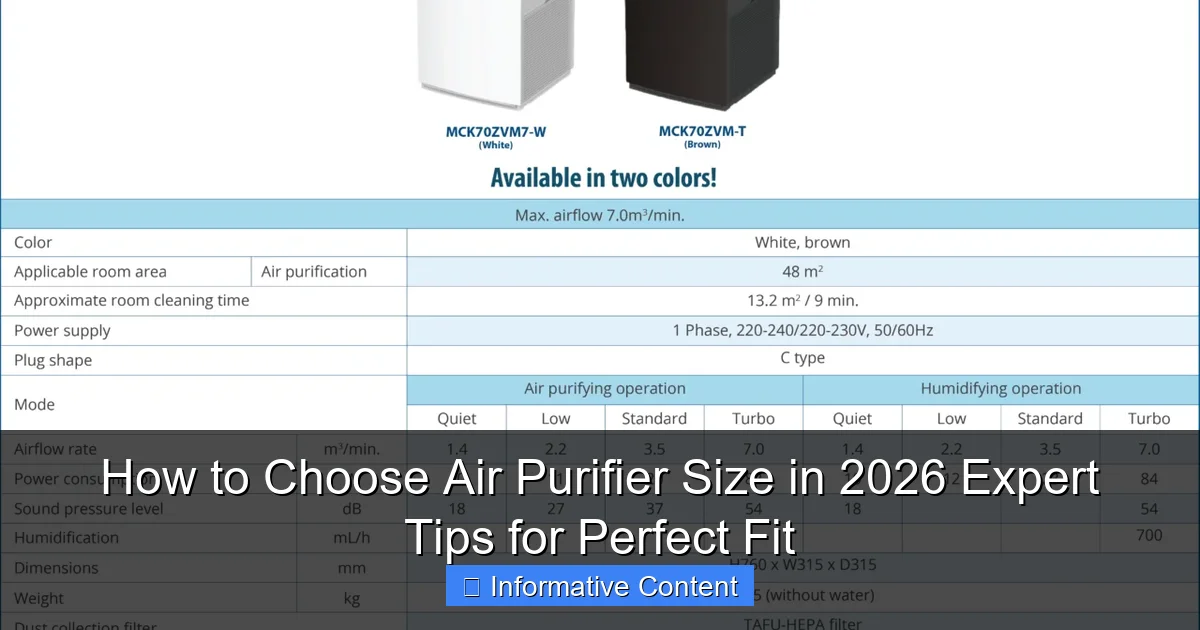
Visual guide about how to choose air purifier size
Image source: daikin.com.ph
The “size” of an air purifier actually refers to its **coverage area**—the square footage (sq ft) it can effectively clean. This is determined by the unit’s **CADR (Clean Air Delivery Rate)** and **air changes per hour (ACH)**. A purifier with a high CADR and 4–5 ACH in a 200 sq ft room will clean the air much faster than a low-CADR model in the same space, even if it’s physically larger.
For example, the Blueair 311 Auto covers up to 388 sq ft with 5 ACH, making it ideal for a medium-sized living room. But if you put it in a 100 sq ft bedroom, it might be too powerful—leading to unnecessary noise and energy use. Size isn’t about the unit’s footprint; it’s about how well it matches your room’s volume and air quality needs.
How Room Size and Ceiling Height Affect Coverage
Most manufacturers list coverage in square feet, but they often assume an 8-foot ceiling. If your ceilings are higher—say, 10 or 12 feet—you’ll need a purifier with a larger coverage area or higher ACH. Why? Because air volume = length × width × height. A 300 sq ft room with 10-foot ceilings has 3,000 cubic feet of air to clean, not 2,400 (which assumes 8-foot ceilings).
Here’s a quick tip: Multiply your room’s square footage by ceiling height to get the true air volume. Then, look for a purifier that either:
- Covers at least that volume (check if the manufacturer provides cubic footage specs)
- Or offers a higher ACH (4–5 is ideal for allergy sufferers)
For instance, a 250 sq ft bedroom with 9-foot ceilings has 2,250 cubic feet of air. A purifier rated for 300 sq ft at 8-foot ceilings (2,400 cubic feet) might work, but one rated for 350 sq ft or with 5 ACH would be a safer bet.
Matching Air Purifier Size to Room Type and Use Case
Bedrooms: Prioritize Quiet Operation and Nighttime Use
Your bedroom is where you spend 6–8 hours a night. During that time, you want clean air, but you also need peace and quiet. A purifier that’s too large for your bedroom will be loud on high settings, disrupting your sleep. A unit that’s too small won’t clean the air effectively, leaving allergens and odors behind.
For a standard 12×12 ft bedroom (144 sq ft), look for a purifier with:
- Coverage of at least 150–200 sq ft
- Low noise levels (under 30 dB on sleep mode)
- Auto mode or light sensors (so it adjusts at night)
For example, the Winix 5500-2 covers 360 sq ft and has a “sleep mode” that reduces fan speed and noise. It’s overkill for a 150 sq ft room, but it works well because you can set it to a lower, quieter speed. A better fit might be the Hathaspace HSP001, which covers 200 sq ft and runs at just 24 dB on low—perfect for light sleepers.
Living Rooms and Open Floor Plans: Think Airflow and Placement
Living rooms are often the largest and most open spaces in a home. If you have an open-concept layout (kitchen + living room + dining area), your air purifier needs to handle a much larger volume of air. But here’s the catch: airflow matters more than raw coverage.
Air purifiers work best when placed in the center of a room, with no obstructions. But in a large living room, you might need two smaller units instead of one giant one. Why? Because air doesn’t flow evenly. A single purifier in a 500 sq ft open space might clean the air near it but leave corners and far walls untouched.
Try this: Use the “rule of two”. If your living room is over 400 sq ft, consider two purifiers (e.g., two 250 sq ft units) placed on opposite sides. This improves air circulation and ensures even cleaning. For example, a 450 sq ft living room with a vaulted ceiling (12 ft high) has 5,400 cubic feet of air. A single 500 sq ft purifier might struggle, but two 300 sq ft units with 4 ACH would do a much better job.
Allergy and Asthma Relief: Higher ACH Is Non-Negotiable
If you or a family member has allergies, asthma, or respiratory issues, you need more than just a purifier that “covers” your room. You need one that **changes the air frequently**. The general rule is:
- 2 ACH: Good for general air cleaning
- 4 ACH: Ideal for allergy and asthma relief
- 5+ ACH: Best for severe sensitivities or high-pollution areas
Let’s say you have a 200 sq ft bedroom and a dust mite allergy. A purifier with 200 sq ft coverage at 2 ACH changes the air twice per hour—once every 30 minutes. But one with 200 sq ft coverage at 4 ACH changes the air every 15 minutes. That means allergens like dust, pollen, and pet dander are removed twice as fast.
Look for purifiers with high CADR ratings for pollen, dust, and smoke (ideally over 200). The IQAir HealthPro Plus has a CADR of 275 for dust and covers 285 sq ft with 5 ACH—perfect for allergy sufferers.
Decoding CADR, ACH, and Other Technical Specs
What Is CADR and Why It Matters
CADR stands for Clean Air Delivery Rate. It’s a number (in cubic feet per minute, or CFM) that tells you how fast an air purifier removes pollutants. The higher the CADR, the more air the purifier can clean per minute. But CADR is broken down into three categories:
- Dust (e.g., dust mites, skin flakes)
- Pollen (e.g., tree, grass, ragweed)
- Smoke (e.g., wildfire smoke, cooking fumes)
A purifier with a CADR of 300 for dust but 150 for smoke means it’s better at removing dust than smoke. If you live in a wildfire-prone area, prioritize a high smoke CADR. If you have seasonal allergies, focus on pollen CADR.
Pro tip: Multiply CADR by 1.56 to estimate coverage. For example, a CADR of 250 ≈ 390 sq ft coverage (250 × 1.56). This helps you cross-check manufacturer claims.
Air Changes Per Hour (ACH) Explained
ACH tells you how many times the purifier replaces the air in a room per hour. It’s calculated as:
ACH = (CADR × 60) / (Room volume in cubic feet)
For example, a purifier with a CADR of 200 in a 1,000 cubic foot room has an ACH of 12 (200 × 60 / 1,000). That’s excellent for allergy relief. But the same purifier in a 3,000 cubic foot room has an ACH of 4—still good, but not as fast.
Here’s a real-world example: You have a 300 sq ft home office with 9-foot ceilings (2,700 cubic feet). You want 4 ACH. The purifier needs a CADR of at least 180 (4 × 2,700 / 60). A model like the Honeywell HPA300 (CADR 300) would give you 6.7 ACH—more than enough.
Physical Size vs. Performance: Don’t Be Fooled
Just because a purifier is large doesn’t mean it’s powerful. Some compact units have high CADR and ACH due to efficient fan and filter designs. Others are bulky but inefficient. Always check CADR and ACH, not just physical dimensions.
For instance, the Dyson Purifier Humidify+Cool Formaldehyde is tall and wide but has a CADR of 200 for dust—lower than smaller units like the Blueair 411 (CADR 120 for dust but covers 185 sq ft with 5 ACH). The Dyson looks impressive, but the Blueair might clean the air faster in a small room.
Special Considerations: Pets, Smoke, and High-Pollution Areas
Pet Owners: Size for Dander and Odors
Pet dander is tiny—often smaller than 2.5 microns—and sticks to surfaces. A purifier that’s too small won’t keep up with the constant shedding. Look for:
- Coverage 20–30% larger than your room size (to account for dander buildup)
- High CADR for dust and smoke (dander behaves like dust)
- Activated carbon filter (to reduce pet odors)
For example, a 200 sq ft room with two shedding cats might need a purifier rated for 250–300 sq ft. The LEVOIT Core 400S covers 403 sq ft, has a CADR of 260 for dust, and includes a carbon filter—ideal for pet owners.
Wildfire Smoke and Urban Pollution: Go Bigger
Smoke particles are tiny and penetrate deeply. During wildfire season or in cities with high PM2.5, you need a purifier that can handle rapid, intense pollution spikes. In these cases:
- Choose a purifier with high smoke CADR (over 200)
- Size up by 1–2 room sizes (e.g., a 300 sq ft purifier for a 200 sq ft room)
- Run it on high or auto mode during pollution events
The IQAir HealthPro Plus has a smoke CADR of 275 and covers 285 sq ft with 5 ACH—perfect for high-pollution areas. But it’s expensive, so consider a more affordable option like the Winix 5500-2 (smoke CADR 232, covers 360 sq ft).
Multi-Purifier Setups: When One Isn’t Enough
In large homes, open layouts, or homes with multiple allergy sufferers, one purifier might not cut it. Consider a zoned approach:
- One purifier in the living room
- One in the master bedroom
- One in a home office or nursery
This ensures consistent air quality everywhere. For example, a 2,000 sq ft home might need three 400 sq ft purifiers (total coverage 1,200 sq ft), strategically placed to avoid overlap and maximize airflow.
Data Table: Air Purifier Size Recommendations by Room
| Room Type | Avg. Size (sq ft) | Recommended Purifier Coverage | Ideal ACH | Example Models |
|---|---|---|---|---|
| Small Bedroom | 100–150 | 150–200 sq ft | 4–5 | Hathaspace HSP001, Blueair 411 |
| Master Bedroom | 200–300 | 300–350 sq ft | 4 | Winix 5500-2, Honeywell HPA300 |
| Living Room (closed) | 300–400 | 400–500 sq ft | 4 | LEVOIT Core 600S, Dyson TP07 |
| Living Room (open) | 400–600 | Two 300 sq ft units | 4 | Two Blueair 311 Auto, Two LEVOIT Core 400S |
| Home Office | 100–200 | 200–250 sq ft | 4 | Winix 6300-2, Coway Airmega 200M |
| Pet Area / Nursery | 150–250 | 250–300 sq ft | 5 | IQAir HealthPro Plus, Rabbit Air MinusA2 |
Final Tips: How to Choose the Perfect Air Purifier Size in 2026
Choosing the right air purifier size isn’t just about matching square footage—it’s about understanding your air quality needs, room dynamics, and personal preferences. Here’s a quick recap:
- Measure your room: Include ceiling height for accurate volume.
- Prioritize ACH: 4–5 ACH for allergies, 2 ACH for general use.
- Check CADR: High CADR for dust, pollen, and smoke based on your concerns.
- Consider placement: Avoid corners; center placement is best.
- Size up for pets/smoke: Add 20–30% extra coverage for heavy pollutants.
- Use multiple units: For large or open spaces, two smaller purifiers beat one big one.
Remember, the best air purifier is the one you actually use. A perfect-sized unit will run quietly, clean the air effectively, and feel like a seamless part of your home. In 2026, with smarter sensors, app controls, and energy-efficient designs, there’s no reason to settle for a purifier that’s too big, too small, or just right—but only if you pick the right air purifier size from the start.
Frequently Asked Questions
How do I choose the right air purifier size for my room?
To choose the right air purifier size, calculate your room’s square footage and ensure the unit’s Clean Air Delivery Rate (CADR) matches or exceeds it. For example, a 300 sq. ft. room needs an air purifier with a CADR of at least 300.
What happens if I use an undersized air purifier?
An undersized air purifier will struggle to clean the air effectively, leading to poor performance and lingering pollutants. Always size up if you’re between models to ensure optimal coverage.
Can I use one air purifier for multiple rooms?
Using one air purifier for multiple rooms is only effective if the unit’s coverage exceeds the total area and doors remain open. For best results, place it centrally or use dedicated units per room.
How does ceiling height affect air purifier size selection?
Most air purifier specs assume 8-foot ceilings. For higher ceilings, multiply your room’s square footage by (ceiling height ÷ 8) to adjust the required CADR. This ensures proper air exchanges per hour.
Are portable air purifiers sized differently than whole-house systems?
Yes, portable air purifiers are sized by room area and CADR, while whole-house systems integrate with HVAC and are sized by total home square footage. Choose based on your needs—portables for spot treatment, whole-house for comprehensive coverage.
What’s the best way to verify air purifier size before buying?
Check the manufacturer’s recommended room size and CADR, then compare it to your room’s dimensions. Online calculators and expert guides (like this one) can help fine-tune your “air purifier size” choice for 2026’s advanced models.