
Featured image for how to choose best air purifier
Image source: reviewsofairpurifiers.com
To choose the best air purifier in 2026, prioritize a high-efficiency HEPA filter with a MERV 17+ rating to capture ultrafine particles, viruses, and allergens. Match the purifier’s CADR (Clean Air Delivery Rate) to your room size and look for smart features like real-time air quality sensors and app control for optimal performance. Always verify third-party certifications like AHAM Verified and CARB compliance to ensure safety and effectiveness.
Key Takeaways
- Match purifier type to your needs: Choose HEPA for allergens, activated carbon for odors.
- Check CADR ratings: Higher numbers mean faster, more efficient air cleaning.
- Prioritize room size: Ensure coverage exceeds your room’s square footage.
- Verify filter replacement costs: Ongoing expenses impact long-term value.
- Look for smart features: Sensors and app control boost usability and performance.
- Noise levels matter: Choose quieter models for bedrooms or offices.
📑 Table of Contents
- Why Air Purifiers Matter More Than Ever in 2026
- Understand Your Air Quality Needs
- Key Features to Look For (And What They Actually Do)
- Room Size, Placement, and Noise: The Practical Side
- Maintenance, Cost, and Long-Term Value
- Special Considerations for Different Lifestyles
- Data Table: Top Air Purifier Features Compared
- Final Thoughts: Breathe Easier, One Choice at a Time
Why Air Purifiers Matter More Than Ever in 2026
Remember the days when we’d open a window to let in fresh air? These days, that “fresh” air might carry wildfire smoke, pollen, or even invisible pollutants from city traffic. I learned this the hard way last winter when my youngest started waking up with a stuffy nose every morning. After a trip to the pediatrician and a quick home air test, we discovered our indoor air quality was worse than the street outside. That’s when I began my deep dive into air purifiers—and honestly, it changed how I think about breathing.
In 2026, air purifiers aren’t just a luxury for allergy sufferers or pet owners. With climate change intensifying seasonal allergies, wildfires becoming more frequent, and urban pollution levels rising, clean indoor air is a necessity. But with hundreds of models on the market—ranging from sleek desktop units to whole-home systems—choosing the right one can feel overwhelming. The good news? You don’t need to be an air quality scientist to pick the best air purifier. You just need the right checklist. And that’s exactly what I’m here to share with you today.
Understand Your Air Quality Needs
Before you even glance at a product page, ask yourself: *What am I trying to fix?* Air purifiers aren’t one-size-fits-all. Your specific needs will shape your entire decision-making process. Let’s break this down into real-life scenarios.
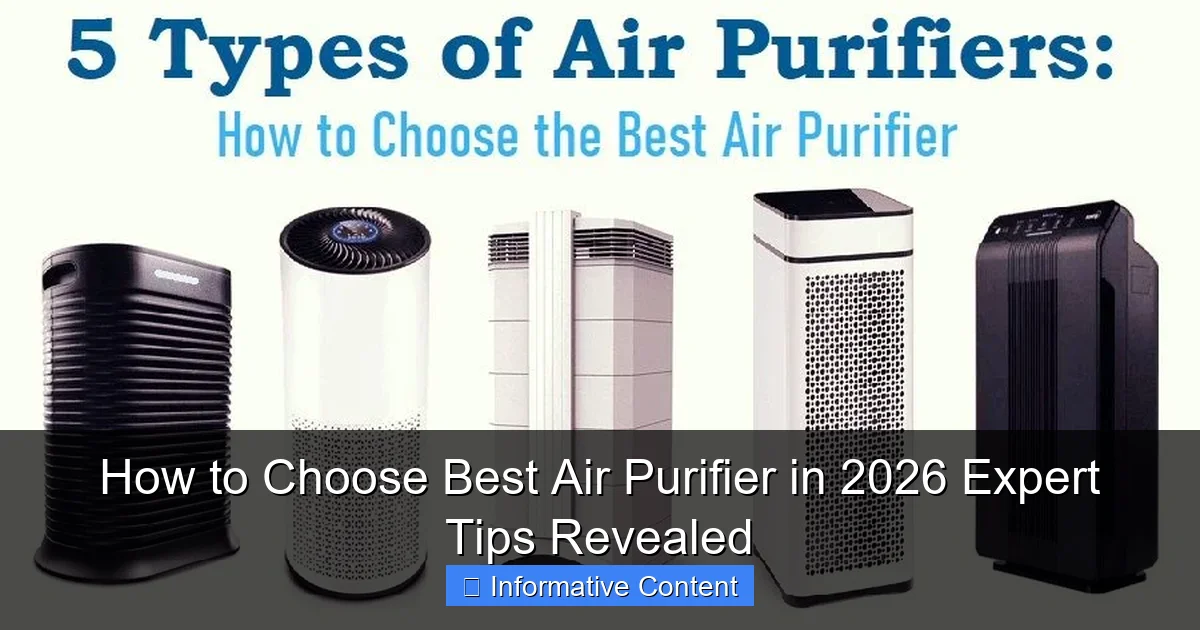
Visual guide about how to choose best air purifier
Image source: blogger.googleusercontent.com
Allergies, Asthma, and Seasonal Triggers
If you sneeze every spring or your asthma flares up indoors, you’re likely battling airborne allergens like pollen, dust mites, and mold spores. These particles are typically between 0.3 and 10 microns in size. For these, you’ll want a purifier with a HEPA filter—specifically, one that meets the True HEPA standard (captures 99.97% of particles 0.3 microns in size).
Take my neighbor Sarah, for example. She has severe hay fever and was skeptical about air purifiers. After trying a HEPA-based model in her bedroom, she noticed her morning congestion dropped by 80% in just two weeks. “I didn’t realize how much pollen was settling in my room overnight,” she told me.
Pet Dander and Odors
Pet lovers, this one’s for you. Dog and cat dander is sticky, lightweight, and floats in the air for hours. Plus, let’s be honest—sometimes our furry friends leave behind more than just love. If you’ve ever walked into a room and smelled “wet dog” or cat litter lingering, you need a purifier that handles both particles and odors.
Look for models with an activated carbon filter alongside HEPA. Carbon absorbs VOCs (volatile organic compounds), smoke, and odors. My friend Mark has two large dogs and a cat. He uses a purifier with a thick carbon layer and swears it eliminated the “dog smell” in his living room. “Guests don’t even realize I have pets,” he laughs.
Smoke, Wildfires, and Wildfire Season
Living in California, I’ve had more than one summer where the sky turned orange. Wildfire smoke contains fine particles (PM2.5) and toxic gases. In these situations, a HEPA + carbon combo is essential. But also consider CADR (Clean Air Delivery Rate)—a higher CADR means faster air cleaning, which is crucial when smoke rolls in unexpectedly.
One tip: During wildfire season, run your purifier 24/7 on high. I keep mine on a smart plug so it turns on automatically when outdoor air quality drops below 100 AQI (Air Quality Index).
General Air Quality and Germs
Even if you don’t have allergies or pets, you may still want cleaner air for health reasons. Airborne viruses, bacteria, and even some fungi can linger indoors. Some purifiers use UV-C light or ionizers to neutralize germs. But be cautious—UV-C can produce ozone (a lung irritant) if not properly shielded. Ionizers may also create ozone or cause particles to stick to walls instead of the filter.
For germ protection without ozone risk, I recommend HEPA + activated carbon + a sealed UV-C chamber. The UV-C only activates *inside* the unit, so no ozone escapes. My sister, a nurse, uses this type of purifier in her home and says her family hasn’t caught a cold in two winters.
Key Features to Look For (And What They Actually Do)
Now that you know your needs, let’s talk features. Not all “smart” or “advanced” tech is worth the extra cost. Here’s what truly matters—and what’s just marketing fluff.
HEPA Filter: The Gold Standard
HEPA stands for High-Efficiency Particulate Air. A True HEPA filter captures 99.97% of particles 0.3 microns in size. That includes dust, pollen, mold, and most bacteria. Avoid “HEPA-like” or “HEPA-type” filters—they’re not held to the same standard and often perform poorly.
Pro tip: Check how often the HEPA filter needs replacing. Some last 6 months; others go 12–18 months. Longer life = lower maintenance cost. For example, the Blueair 311 Auto uses a 12-month HEPA filter, while cheaper models may need replacements every 6 months.
Activated Carbon Filter: The Odor Eliminator
Carbon doesn’t trap particles—it absorbs gases and odors through a process called adsorption (yes, with a “d”). The thicker the carbon layer, the better it works. Look for “granular activated carbon” with a high surface area (measured in m²/g). A 200g carbon bed is decent; 400g+ is excellent.
One thing to note: Carbon filters eventually saturate. Once they do, they can start *releasing* odors. That’s why I always check for filter replacement indicators—some purifiers use sensors to tell you when it’s time to change the carbon, not just the HEPA.
CADR: Speed Matters
CADR measures how quickly a purifier can clean the air in a given space. It’s rated for dust, pollen, and smoke. A higher number means faster cleaning. For example:
- 100 CADR = good for small rooms (100 sq ft)
- 200 CADR = ideal for medium rooms (200–300 sq ft)
- 300+ CADR = great for large rooms or open layouts
Rule of thumb: Your purifier’s CADR should be at least two-thirds of your room’s square footage. So for a 300 sq ft living room, aim for 200+ CADR. If you’re in a wildfire-prone area, go even higher.
Air Changes Per Hour (ACH)
ACH tells you how many times the purifier can exchange the air in a room per hour. For allergy relief, 4–6 ACH is ideal. That means the air is completely refreshed 4–6 times every hour. Most purifiers list ACH on their spec sheet. If not, you can calculate it:
ACH = (CADR x 60) / (Room Volume in cubic feet)
For a 300 sq ft room with 8 ft ceilings: Volume = 2,400 cubic feet. If CADR = 200: (200 x 60) / 2,400 = 5 ACH. Perfect!
Smart Features: Helpful or Hype?
Smart purifiers can connect to apps, show real-time air quality, and even adjust fan speed automatically. I love my AirVisual Node because it displays PM2.5, CO2, and humidity levels. But not all smart features are useful. Ask yourself:
- Do you really need Alexa/Google Assistant control?
- Will you check the app daily, or will it gather dust (pun intended)?
- Is the app stable, or does it crash often?
I once bought a “smart” purifier with a buggy app. It disconnected every week. I ended up using it manually—so all that tech was wasted. Sometimes, simplicity wins.
Room Size, Placement, and Noise: The Practical Side
A purifier can have the best specs, but if it’s too loud or placed wrong, it won’t help. Let’s talk real-world use.
Match Purifier Size to Room Size
Too small = ineffective. Too big = overkill and higher energy use. Check the manufacturer’s recommended room size. But don’t stop there. Measure your room and calculate ACH (as we did above). If the purifier’s CADR is too low, it’ll struggle—especially in high-pollution moments.
For example, my bedroom is 12×15 ft (180 sq ft). I use a purifier with 180 CADR and 5 ACH. That’s spot-on. But if I put the same unit in my 400 sq ft open-plan living room, ACH drops to 2.5—not enough for allergy relief.
Where to Place Your Purifier
Air purifiers work best when placed:
- In the room where you spend the most time (bedroom, living room, home office)
- At least 6 inches from walls and furniture (to allow airflow)
- Near pollution sources (e.g., near a pet bed, litter box, or kitchen)
- On a table or shelf (not the floor, where dust and pet hair accumulate)
I made the mistake of placing my first purifier behind a couch. It was quiet, but airflow was terrible. After moving it to a central spot, I noticed a big difference in air quality.
Noise Levels: Can You Sleep With It On?
Noise is measured in decibels (dB). Here’s a quick guide:
- 10–20 dB: Whisper-quiet (ideal for bedrooms)
- 20–30 dB: Quiet hum (good for light sleepers)
- 30–40 dB: Noticeable but not disruptive
- 40+ dB: Loud—avoid for bedrooms
Many purifiers have a “sleep mode” that drops noise to 20–25 dB. My Dyson Purifier Humidify+Cool is 22 dB on low—perfect for my light-sleeping husband. But on high, it hits 48 dB. We only use high mode during wildfire alerts.
Maintenance, Cost, and Long-Term Value
Buying a purifier is just the start. Long-term, you’ll deal with filter replacements, energy use, and wear-and-tear. Let’s talk dollars and sense.
Filter Replacement Costs
Filters aren’t cheap. A HEPA filter can cost $30–$80; carbon filters $20–$50. Some brands use proprietary filters—so you can’t buy cheaper third-party ones. Others allow aftermarket filters (which can save 30–50%).
Example: The Levoit Core 300 uses a $35 HEPA filter that lasts 6–8 months. That’s $70/year. The Blueair 211+ uses a $60 filter lasting 12 months—$60/year. Slightly cheaper long-term.
Tip: Sign up for filter subscription services. Many brands offer 10–15% off if you auto-ship filters every 6–12 months.
Energy Use: It Adds Up
Most purifiers use 30–100 watts. At 10 cents/kWh, that’s $26–$87/year if run 24/7. Energy-efficient models use DC motors, which draw less power. Look for Energy Star certification—it guarantees low energy use.
My old purifier used 80 watts. My new one uses 35 watts on high. That’s a $45/year savings—enough to buy a filter!
Durability and Warranty
Cheap purifiers often die in 1–2 years. Look for:
- At least a 2-year warranty (some brands offer 5 years)
- Solid build quality (avoid flimsy plastic)
- Customer reviews mentioning longevity
I once bought a $50 purifier. It lasted 18 months. My current $180 model is 4 years old and still going strong. Sometimes, spending more upfront saves money later.
Special Considerations for Different Lifestyles
Your lifestyle shapes your purifier needs. Here’s how to tailor your choice.
For Families with Babies and Toddlers
Infants breathe faster and are more sensitive to pollutants. Choose a purifier with:
- No ozone emission (avoid ionizers or unshielded UV-C)
- Quiet operation (so it doesn’t disrupt naps)
- Child-safe design (no sharp edges, tip-resistant base)
I recommend the Winix 5500-2 for nurseries. It’s quiet, has a true HEPA filter, and no ozone. Plus, it’s affordable.
For Home Offices and Remote Workers
Stale air can cause headaches and fatigue. Look for:
- CO2 and VOC sensors (to monitor air quality during long workdays)
- Smart scheduling (so it runs during work hours, not all night)
- Low noise on medium settings
The IQAir HealthPro 150 is a favorite among remote workers. It has advanced sensors and whisper-quiet operation.
For Small Apartments and Studios
Space is tight. Consider:
- Compact size (under 10 inches wide)
- Multi-room use (a unit that can handle a 300 sq ft studio)
- Dual-function models (e.g., purifier + humidifier or fan)
The Dyson Purifier Humidify+Cool is pricey but perfect for small spaces. It purifies, humidifies, and cools—all in one.
Data Table: Top Air Purifier Features Compared
| Feature | Why It Matters | What to Look For | Red Flags |
|---|---|---|---|
| HEPA Filter | Removes 99.97% of tiny particles (dust, pollen, mold) | True HEPA (not “HEPA-like”), 12+ month lifespan | “HEPA-type” filters, short filter life |
| Activated Carbon | Absorbs odors, smoke, VOCs | 200g+ granular carbon, replacement indicator | Carbon pads (less effective), no indicator |
| CADR | Measures cleaning speed | 2/3 of room size (e.g., 200 CADR for 300 sq ft) | CADR not listed, low numbers |
| Noise Level | Impacts sleep and comfort | <30 dB on low, <40 dB on high | 40+ dB on medium/high |
| Smart Features | Convenience and air quality tracking | Stable app, real-time sensors, auto mode | Bugs, no sensor data, poor connectivity |
| Warranty | Protects against defects | 2+ years, good customer service | 1 year or less, no phone support |
Final Thoughts: Breathe Easier, One Choice at a Time
Choosing the best air purifier in 2026 isn’t about finding the “most advanced” or “smartest” model. It’s about matching the right tool to your life. Whether you’re fighting seasonal allergies, pet odors, wildfire smoke, or just want fresher air, there’s a purifier that fits.
Start with your needs. Measure your room. Prioritize HEPA and carbon filters. Check CADR and ACH. Don’t ignore noise and maintenance costs. And remember—placement matters as much as performance. A purifier in the wrong spot is like a gym membership you never use.
I’ll leave you with one final tip: Don’t wait for a health scare or smoke-filled sky to act. Clean air is a daily investment. Once you experience it—like I did when my kid finally slept through the night—you’ll wonder how you ever lived without it. Breathe easy, friend. You’ve got this.
Frequently Asked Questions
What should I look for when choosing the best air purifier in 2026?
Prioritize a high-efficiency HEPA filter (capturing 99.97% of particles), room size compatibility, and smart features like air quality sensors. Look for CADR ratings and low noise levels for optimal performance.
How do I know which air purifier is best for my room size?
Check the manufacturer’s recommended room size (in sq. ft.) and ensure it exceeds your space. Larger rooms may require multiple units or a high-CFM model for effective air exchange.
Is a HEPA filter necessary in the best air purifier?
Yes, HEPA filters are essential for trapping allergens, dust, and ultrafine particles. Avoid “HEPA-type” filters—true HEPA meets strict 0.3-micron particle standards for the best air purifier performance.
Can the best air purifier help with allergies or asthma?
Absolutely. Look for air purifiers with HEPA filters and activated carbon to remove pollen, pet dander, and odors. Some models include allergen-reducing pre-filters for added protection.
How often do I need to replace filters in an air purifier?
Most HEPA filters last 6–12 months, while carbon filters need replacement every 3–6 months. Check your model’s indicator or app alerts to maintain the best air purifier efficiency.
Are smart air purifiers worth the extra cost?
Smart models offer real-time air quality monitoring, automatic mode adjustments, and app control—ideal for convenience. If you value data tracking and hands-off use, they’re a smart investment.