
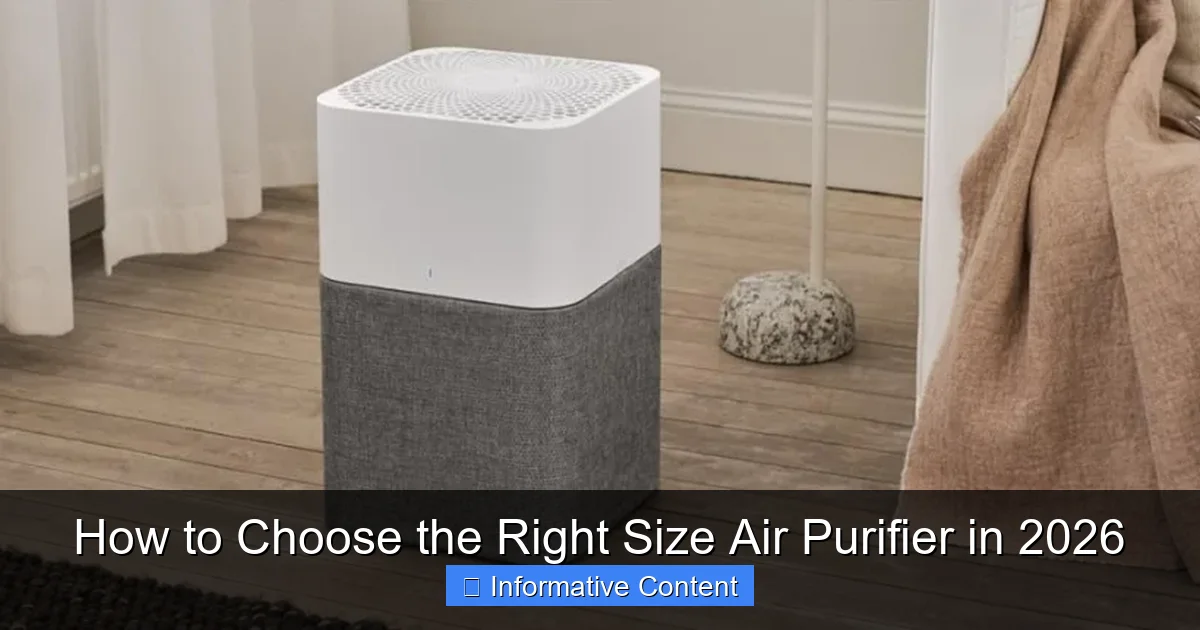
Featured image for how to choose the right size air purifier
Image source: bestairpurifiercanada.com
Choosing the right size air purifier starts with matching its Clean Air Delivery Rate (CADR) to your room’s square footage—too small, and it won’t clean effectively; too large, and you’re wasting energy and money. Look for models certified by AHAM or ENERGY STAR and consider ceiling height, air exchange needs, and pollutant types for optimal performance in 2026’s advanced air quality landscape.
“`html
Key Takeaways
- Measure your room size: Calculate square footage to match air purifier coverage accurately.
- Check ACH rating: Aim for 4-5 air changes per hour for optimal purification.
- Prioritize CADR: Choose a purifier with a CADR matching your room’s needs.
- Consider noise levels: Pick quieter models for bedrooms or offices with low decibels.
- Account for filters: Ensure replacement filters are affordable and easy to find.
- Evaluate portability: Select lightweight designs with handles for multi-room use.
📑 Table of Contents
- How to Choose the Right Size Air Purifier in 2026
- Why Size Matters More Than You Think
- Understanding Key Metrics: CADR, ACH, and Room Size
- How to Measure Your Room Accurately
- Choosing the Right Size for Different Rooms
- Top Air Purifier Sizes and Their Ideal Uses (2026 Guide)
- Common Mistakes to Avoid When Sizing an Air Purifier
- Final Tips for Choosing the Right Size in 2026
- Conclusion: Breathe Easy with the Right Fit
How to Choose the Right Size Air Purifier in 2026
Let’s be honest—choosing an air purifier can feel like trying to pick the perfect coffee order at a busy café. There are so many options, features, and technical terms that it’s easy to feel overwhelmed. You want something that actually works, fits your space, and doesn’t sound like a jet engine taking off. But here’s the thing: the most important factor in an air purifier’s effectiveness isn’t its fancy design or smart app—it’s the right size.
In 2026, air quality is more important than ever. With rising concerns about wildfire smoke, urban pollution, seasonal allergies, and lingering viruses, people are investing in air purifiers like never before. But buying one that’s too small is like trying to clean a swimming pool with a garden hose—it just won’t cut it. On the flip side, an oversized unit might be overkill, wasting energy and money. So how do you find that Goldilocks zone—just right for your room? That’s exactly what we’re going to walk through today. Whether you’re purifying a cozy bedroom, a bustling living room, or a home office, this guide will help you choose the right size air purifier with confidence.
Why Size Matters More Than You Think
You might be thinking, “Can’t I just buy any air purifier and hope it works?” Well, technically yes—but effectiveness is a whole different story. The size of your air purifier directly impacts how well it cleans the air in your space. Think of it like this: if you’re trying to cool a large living room with a tiny fan, you’ll be sweating in no time. The same logic applies to air purification.

Visual guide about how to choose the right size air purifier
Image source: bestairpurifiercanada.com
How Air Purifiers Actually Work
Most air purifiers use a fan to pull air through a series of filters—typically a pre-filter, HEPA filter, and sometimes an activated carbon filter. The fan’s job is to circulate the air in the room so that pollutants like dust, pollen, pet dander, and smoke get trapped in the filters. But if the purifier isn’t powerful enough for the room size, it simply can’t move enough air to make a noticeable difference.
The Risks of Going Too Small
Imagine placing a small desktop purifier in a 400-square-foot living room. It might run all day and still leave you sneezing from dust or pet allergies. That’s because the unit isn’t designed to handle that volume of air. Over time, this can lead to frustration, wasted money, and even health issues if pollutants aren’t adequately removed.
The Downsides of Going Too Big
On the other hand, an oversized purifier might seem like a smart move—more power, right? But bigger isn’t always better. Oversized units can be noisy, consume more electricity, and cost significantly more upfront. Plus, they might cycle the air too quickly, not giving the filters enough time to capture smaller particles effectively. It’s like using a firehose to water a houseplant—possible, but inefficient and potentially damaging.
So, the sweet spot? A purifier that’s properly sized for your room. That means matching the unit’s Clean Air Delivery Rate (CADR) and coverage area to your space. Let’s break that down next.
Understanding Key Metrics: CADR, ACH, and Room Size
When shopping for an air purifier, you’ll come across terms like CADR, ACH, and square footage coverage. These aren’t just marketing buzzwords—they’re essential tools for choosing the right size. Let’s unpack what each one means and why it matters.
What Is CADR and Why It Matters
CADR stands for Clean Air Delivery Rate. It’s a standardized measurement developed by the Association of Home Appliance Manufacturers (AHAM) that tells you how quickly an air purifier can deliver clean air. CADR is usually listed for three types of pollutants: smoke, dust, and pollen. The higher the number, the faster the purifier cleans the air.
For example, a purifier with a CADR of 200 for smoke means it can remove smoke particles from 200 cubic feet of air per minute. AHAM recommends that your purifier’s CADR should be at least two-thirds the size of your room in square feet. So, for a 300-square-foot room, you’d want a CADR of at least 200.
ACH: Air Changes Per Hour
ACH stands for Air Changes Per Hour. This tells you how many times the purifier can completely cycle the air in a room in one hour. For most homes, experts recommend an ACH of at least 4–6 for effective air cleaning. That means the purifier should refresh the entire room’s air 4 to 6 times per hour.
To calculate ACH, you’ll need to know your room’s volume (length × width × ceiling height). Then, divide the purifier’s airflow rate (usually in cubic feet per minute, or CFM) by the room volume and multiply by 60. Most manufacturers provide this info, but it’s good to double-check.
Matching Purifier Size to Room Size
The simplest way to choose the right size is to match the purifier’s recommended coverage area to your room size. Most models list a maximum square footage they’re designed for. For example:
- A small bedroom (150 sq ft): Look for a purifier rated for 150–200 sq ft
- A medium living room (300 sq ft): Choose one rated for 300–400 sq ft
- A large open-concept space (600+ sq ft): Opt for a high-capacity model or consider multiple units
But don’t stop at square footage. Always cross-check the CADR and ACH to ensure the purifier can actually keep up with your room’s air volume.
How to Measure Your Room Accurately
You can’t choose the right size air purifier if you don’t know your room’s true dimensions. It might seem simple, but many people underestimate their space—especially when it comes to ceiling height or irregular layouts. Let’s walk through how to measure your room like a pro.
Step-by-Step Room Measurement
Grab a tape measure, a notepad, and maybe a friend to help. Here’s how to do it:
- Measure the length and width of the room in feet. If it’s not a perfect rectangle, break it into sections and add them up.
- Measure the ceiling height from floor to ceiling. Standard ceilings are 8 feet, but vaulted or high ceilings can be 9–12 feet or more.
- Calculate the square footage by multiplying length × width. For example, a 12 ft × 15 ft room = 180 sq ft.
- Calculate the volume by multiplying square footage × ceiling height. So, 180 sq ft × 8 ft = 1,440 cubic feet.
Dealing with Open Floor Plans
Open-concept living rooms, kitchens, and dining areas can be tricky. If your space flows into another room, you’ll need to measure the total combined area. But be realistic—air doesn’t always circulate evenly across large, open spaces. In these cases, consider using two smaller purifiers in different zones rather than one oversized unit.
Accounting for Furniture and Obstructions
Don’t forget that furniture, bookshelves, and curtains can block airflow. A purifier placed behind a couch or in a corner might not work as efficiently. Aim to place your unit in an open area with at least 6–12 inches of clearance on all sides. This ensures proper air intake and circulation.
Pro tip: Use a laser distance measurer or a smartphone app with AR measurement tools for faster, more accurate readings. Many free apps can help you map out your room in minutes.
Choosing the Right Size for Different Rooms
Not all rooms are created equal when it comes to air purification. A bedroom has different needs than a kitchen or home office. Let’s look at how to choose the right size air purifier for common spaces in your home.
Bedrooms: Quiet and Consistent
Bedrooms are where you spend 6–8 hours a night, so clean air is crucial for sleep and health. But noise is a big concern—no one wants a loud purifier disrupting their rest.
- Room size: Typically 100–250 sq ft
- Recommended CADR: 150–200
- Key features: Low noise level (under 30 dB on the lowest setting), night mode, HEPA filter
Example: The Levoit Core 300 is a popular choice for bedrooms. It covers up to 219 sq ft, has a CADR of 141, and runs quietly at 24 dB.
Living Rooms: High Traffic, High Pollution
Living rooms often have the most foot traffic, pets, and outdoor pollutants tracked in. They’re also larger, so you’ll need a more powerful unit.
- Room size: 300–500 sq ft
- Recommended CADR: 250–350
- Key features: High airflow, multi-stage filtration, auto mode
Example: The Blueair Blue Pure 211+ covers up to 540 sq ft with a CADR of 350. It’s great for open living spaces and handles dust, smoke, and pollen well.
Kitchens: Tackling Odors and Grease
Kitchens produce smoke, cooking odors, and grease particles. Standard HEPA filters won’t cut it—you’ll need activated carbon or a specialized filter.
- Room size: Often part of an open plan, but treat as 200–300 sq ft zone
- Recommended CADR: 200–300
- Key features: Carbon filter, washable pre-filter, high smoke CADR
Example: The Winix 5500-2 includes a True HEPA filter and a washable AOC carbon filter, making it ideal for kitchen use.
Home Offices: Focus and Air Quality
With more people working from home, air quality in offices matters for concentration and long-term health.
- Room size: 100–200 sq ft
- Recommended CADR: 150–200
- Key features: Compact design, low noise, smart sensors
Example: The Dyson Purifier Cool doubles as a fan and purifier, covering up to 800 sq ft but works well in smaller offices with its quiet operation.
Top Air Purifier Sizes and Their Ideal Uses (2026 Guide)
To make your decision easier, here’s a quick-reference table of common air purifier sizes and the rooms they’re best suited for. These recommendations are based on 2026 models and updated industry standards.
| Purifier Size (Coverage) | Best For | CADR Range | Example Models |
|---|---|---|---|
| 100–200 sq ft | Small bedrooms, nurseries, home offices | 100–180 | Levoit Core 300, Honeywell HPA100 |
| 200–400 sq ft | Medium bedrooms, small living rooms, studios | 180–300 | Blueair Blue Pure 211+, Winix 5500-2 |
| 400–600 sq ft | Large living rooms, open-concept spaces | 300–400 | IQAir HealthPro Plus, Coway Airmega 400 |
| 600+ sq ft | Great rooms, basements, large apartments | 400+ | Dyson Purifier Big+Quiet, Austin Air HealthMate |
Keep in mind that these are general guidelines. Always check the manufacturer’s specifications and consider your specific air quality needs.
Common Mistakes to Avoid When Sizing an Air Purifier
Even with all this info, it’s easy to make mistakes. Here are some common pitfalls and how to avoid them.
Ignoring Ceiling Height
Many people only consider square footage, but ceiling height affects air volume. A 300 sq ft room with 10-foot ceilings has 3,000 cubic feet of air—much more than one with 8-foot ceilings (2,400 cubic feet). Always factor in height when calculating ACH.
Overlooking Airflow Obstructions
Placing a purifier behind furniture or in a corner can block airflow. Make sure it has space to breathe. Also, avoid placing it near walls or curtains that might restrict intake.
Assuming Bigger Is Always Better
As mentioned earlier, oversized purifiers can be noisy and inefficient. They might also cycle air too quickly, reducing filter contact time. Match the size to your room, not your ego.
Not Considering Future Needs
Are you planning to move? Have a baby? Get a pet? Think ahead. A purifier that’s perfect for a studio apartment might not cut it in a future family home. Consider scalability.
Skipping the Filter Replacement Cost
Larger purifiers often have bigger, more expensive filters. Factor in the long-term cost of replacements. Some models use washable filters, which can save money over time.
Final Tips for Choosing the Right Size in 2026
We’ve covered a lot, but here are a few final tips to seal the deal:
- Use the 2/3 rule: Your CADR should be at least two-thirds of your room’s square footage.
- Check AHAM verification: Look for the AHAM seal to ensure accurate CADR ratings.
- Read real user reviews: Manufacturer specs are one thing, but real-world performance matters. Look for feedback on noise, effectiveness, and ease of use.
- Consider smart features: Many 2026 models include air quality sensors, auto mode, and app control. These can help the purifier adjust to your room’s needs dynamically.
- Test it out: If possible, run the purifier for a week and see how it performs. Some retailers offer return policies if it’s not a good fit.
Choosing the right size air purifier doesn’t have to be stressful. With a little math, some smart shopping, and attention to your space’s unique needs, you can breathe easy knowing your air is clean, fresh, and healthy.
Conclusion: Breathe Easy with the Right Fit
At the end of the day, the best air purifier is the one that fits your life—not the one with the flashiest ads or the highest price tag. In 2026, air quality is a priority, and choosing the right size purifier is the first step toward a healthier home. Whether you’re fighting allergies, pet dander, or city smog, the right unit will make a noticeable difference in how you feel every day.
Remember: size matters. But it’s not just about square footage—it’s about matching CADR, ACH, and room volume to your specific needs. Take the time to measure your space, understand the metrics, and avoid common sizing mistakes. And don’t forget to consider noise, filter costs, and future needs.
With the tips and insights in this guide, you’re now equipped to make a confident, informed decision. So go ahead—find that perfect purifier, place it in the right spot, and enjoy the peace of mind that comes with clean, breathable air. Your lungs (and your family) will thank you.
“`
Frequently Asked Questions
How do I determine the right size air purifier for my room?
To choose the right size air purifier, start by measuring the square footage of the room where it will be used. Look for a model with a Clean Air Delivery Rate (CADR) that matches or exceeds your room size for optimal performance.
What is the best air purifier size for a large living room?
For a large living room (over 500 sq. ft.), choose an air purifier with a high CADR rating and coverage area designed for large spaces. Some top-rated models in 2026 offer 600+ sq. ft. coverage and multi-stage filtration for better air quality.
Can an air purifier be too big for a small room?
While an oversized air purifier won’t harm a small room, it may use more energy and cost more than necessary. Opt for a compact model with appropriate coverage to maintain efficiency and save on long-term operating costs.
How does ceiling height affect air purifier size selection?
Standard air purifier sizing assumes 8-foot ceilings. If your room has higher ceilings, increase the required coverage area by 25–50% to ensure effective air circulation and filtration throughout the space.
Should I buy an air purifier based on room size or CADR rating?
Both matter, but prioritize the CADR rating—it measures how quickly the purifier delivers clean air. Match the CADR to your room size and consider higher ratings for spaces with pets, allergies, or high pollution levels.
Is it better to get one large air purifier or multiple smaller ones?
For open-concept areas, one large air purifier with wide coverage is usually more efficient. However, multiple smaller units may work better in multi-room homes with closed doors, ensuring each space gets targeted air cleaning.