
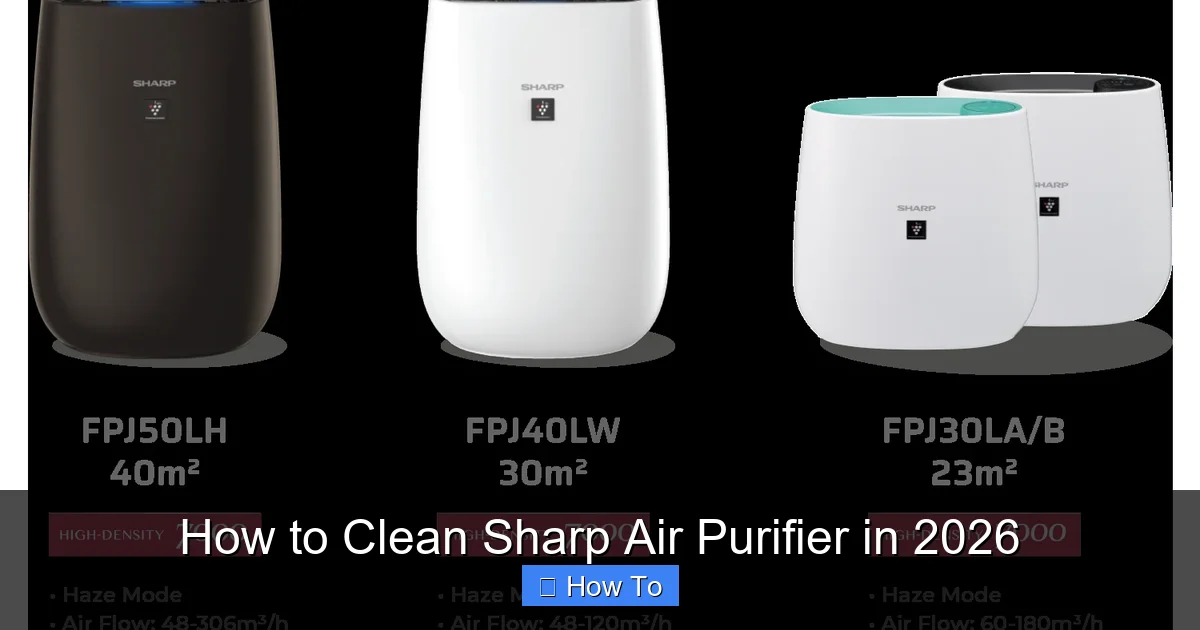
Featured image for how to clean sharp air purifier
Image source: my.sharp
Regularly cleaning your Sharp air purifier is essential to maintain peak performance and prolong its lifespan. Follow a simple routine: unplug the unit, remove and rinse the pre-filter, gently vacuum or wipe the unit’s exterior, and ensure the HEPA and active carbon filters are replaced or cleaned as recommended—never washed if non-washable. Staying consistent with maintenance in 2026 ensures cleaner air and optimal efficiency year-round.
“`html
How to Clean Sharp Air Purifier in 2026
Key Takeaways
- Unplug first: Always disconnect power before cleaning for safety.
- Wipe exterior: Use a damp cloth to clean the outer surface gently.
- Wash filters: Rinse pre-filters monthly; avoid harsh detergents.
- Replace HEPA: Install new HEPA filters every 2–3 years for peak performance.
- Vacuum vents: Clear dust from air inlets/outlets with a soft brush.
- Dry thoroughly: Air-dry all parts completely before reassembling the unit.
Why This Matters / Understanding the Problem
Let’s be real—your Sharp air purifier works hard. Every day, it quietly pulls in dust, pollen, pet dander, and even invisible pollutants from your home. But if you’ve been using it for months (or years!) without a proper clean, you might actually be making your indoor air worse, not better.
I learned this the hard way. Last winter, my allergies were going haywire even though my Sharp purifier was running 24/7. I assumed it was just seasonal pollen—until I opened the unit and found a thick layer of grime clogging the filters. Turns out, a dirty purifier can recirculate trapped particles instead of cleaning the air. That’s when I realized: knowing how to clean Sharp air purifier in 2026 isn’t optional—it’s essential.
Over time, dust builds up on pre-filters, HEPA filters get saturated, and internal fans collect debris. Without regular maintenance, your purifier loses efficiency, uses more energy, and may even emit musty odors. Plus, newer Sharp models (like the FP-JM60V-W or KC-G50-W) come with advanced features like Plasmacluster ion technology and humidity sensors—all of which need proper care to function as designed.
Cleaning your Sharp air purifier isn’t just about longevity; it’s about performance. A well-maintained unit removes up to 99.97% of airborne particles, keeps your family healthier, and saves you money by avoiding premature filter replacements. So whether you’re dealing with wildfire smoke, pet hair, or just everyday city pollution, this guide will show you exactly how to clean Sharp air purifier in 2026—safely, thoroughly, and without breaking a sweat.
What You Need
Before we dive in, let’s gather your supplies. Don’t worry—you probably already have most of these at home. The key is using the right tools so you don’t damage delicate components.

Visual guide about how to clean sharp air purifier
Image source: shop.unearthstore.com
- Soft microfiber cloths – These won’t scratch surfaces or leave lint behind.
- Mild dish soap – Avoid harsh chemicals or ammonia-based cleaners—they can degrade plastic parts.
- White vinegar – Great for breaking down mineral deposits or sticky residue (especially on humidifier tanks in models like the KC series).
- Soft-bristle brush – An old toothbrush works perfectly for tight spaces.
- Vacuum cleaner with brush attachment – Ideal for gently removing loose dust from vents and pre-filters.
- Compressed air (optional) – Useful for blowing dust out of fan blades or sensor areas.
- Replacement filters (if needed) – Check your model number—Sharp recommends replacing HEPA filters every 5 years and pre-filters every 2–3 months depending on usage.
Pro tip: Always unplug your purifier before cleaning! Even though it’s off, there’s still a small risk of electric shock if water gets near internal components. Safety first—always.
Step-by-Step Guide to How to Clean Sharp Air Purifier in 2026
Step 1: Turn Off and Unplug the Unit
This might seem obvious, but it’s easy to skip when you’re in a hurry. I once tried cleaning my purifier while it was still plugged in—bad idea. Not only is it unsafe, but you risk damaging the motor or sensors.

Visual guide about how to clean sharp air purifier
Image source: my.sharp
Make it a habit: flip the power switch to “off,” then unplug the cord from the wall. Give the unit a minute to fully power down. If your model has a display screen, wait until it goes completely dark.
While you’re at it, check the user manual (or Sharp’s online support page) for your specific model. Some newer Sharp purifiers have indicator lights that tell you when filters need replacing—don’t ignore those!
Step 2: Remove and Clean the Pre-Filter
The pre-filter is your purifier’s first line of defense. It catches large particles like hair, lint, and dust bunnies before they reach the HEPA filter. Because it gets the dirtiest fastest, it needs the most frequent attention.
On most Sharp models, the pre-filter is located behind the front grille. Gently press the release tabs (usually on the sides or bottom) and slide the grille out. You’ll see a mesh-like filter—that’s your pre-filter.
Take it out and give it a good shake over a trash can to remove loose debris. Then, use your vacuum’s brush attachment to suck up embedded dust. For stubborn grime, rinse it under lukewarm water with a drop of mild dish soap. Never use hot water—it can warp the mesh.
After rinsing, pat it dry with a clean towel and let it air-dry completely (at least 2–4 hours). Never reinstall a damp filter—it can promote mold growth and reduce airflow.
Warning: Don’t soak the pre-filter for more than 10 minutes. Prolonged exposure to water can weaken the frame and reduce its effectiveness.
Step 3: Clean the Main HEPA Filter (If Washable)
Here’s where things get tricky. Most Sharp HEPA filters are NOT washable—they’re made of tightly packed fiberglass that loses integrity when wet. But some older or specialty models (like certain KC-series humidifying purifiers) include a washable HEPA-type filter.
Check your user manual or look for a label on the filter itself. If it says “washable” or “reusable,” you’re in luck. Otherwise, skip to Step 4.
If your HEPA filter is washable, gently vacuum both sides first. Then rinse it under cool running water—no soap! Let it dry naturally for 24 hours in a well-ventilated area. Never use a hairdryer or place it near a heater—heat warps the fibers.
For non-washable HEPA filters, stick to dry cleaning only. Use your vacuum’s brush attachment on low suction to remove surface dust. Do this outside if possible to avoid spreading allergens indoors.
Remember: even if you clean it perfectly, a HEPA filter has a lifespan. Sharp recommends replacing it every 5 years under normal use—sooner if you have pets, smokers, or live in a high-pollution area.
Step 4: Wipe Down the Interior and Fan Blades
Now that the filters are out, you’ll see the inner chamber. This is where dust loves to hide—especially around the fan blades and airflow sensors.
Use a dry microfiber cloth to wipe down the interior walls. For tight corners, wrap the cloth around a butter knife or use your soft-bristle brush. Be gentle—Sharp’s internal components are precise and easily damaged.
The fan blades are often the sneakiest culprits. Over time, dust wraps around the blades like a fuzzy sweater, slowing rotation and reducing suction. Use compressed air to blow dust off, or carefully wipe each blade with a slightly damp cloth (wring it out well!). Avoid spraying liquid directly into the unit.
If your model has a humidity tank (common in KC-series purifiers), empty it completely. Rinse it with warm water and a splash of white vinegar to dissolve mineral buildup. Scrub gently with a bottle brush, then rinse thoroughly.
Step 5: Clean the Exterior and Air Vents
Your purifier’s outside might look clean, but grime builds up on the control panel, handle, and air intake/outlet vents. This not only looks bad—it can block airflow.
Mix a solution of 1 part white vinegar and 2 parts water in a spray bottle. Lightly mist a microfiber cloth (never spray directly on the unit!) and wipe down the entire exterior. Pay extra attention to the vents—use your soft brush to dislodge dust from the slats.
For touchscreens or digital displays, use a screen-safe cleaner or just a dry microfiber cloth. Avoid abrasive sponges—they’ll scratch the surface.
Don’t forget the bottom! Flip the unit over (gently!) and clean the base where dust accumulates. Some models have rubber feet that trap dirt—wipe those too.
Step 6: Reassemble and Test
Once everything is dry and clean, it’s time to put your purifier back together. Make sure all filters are seated correctly—misaligned filters can cause leaks or reduced performance.
Slide the pre-filter back into place, then reattach the front grille until it clicks securely. Plug the unit back in and turn it on. Listen for unusual noises—if the fan sounds strained or rattly, double-check that nothing is obstructing the blades.
Run it on low for 10–15 minutes to ensure proper airflow. If your model has a filter reset button (common on FP and KC series), press it to recalibrate the system. This tells the purifier it’s working with fresh filters.
Finally, place it back in its usual spot—ideally 6–12 inches away from walls or furniture for optimal air circulation.
Pro Tips & Common Mistakes to Avoid
After cleaning dozens of Sharp purifiers (mine and friends’!), I’ve seen what works—and what doesn’t. Here’s my hard-earned wisdom:
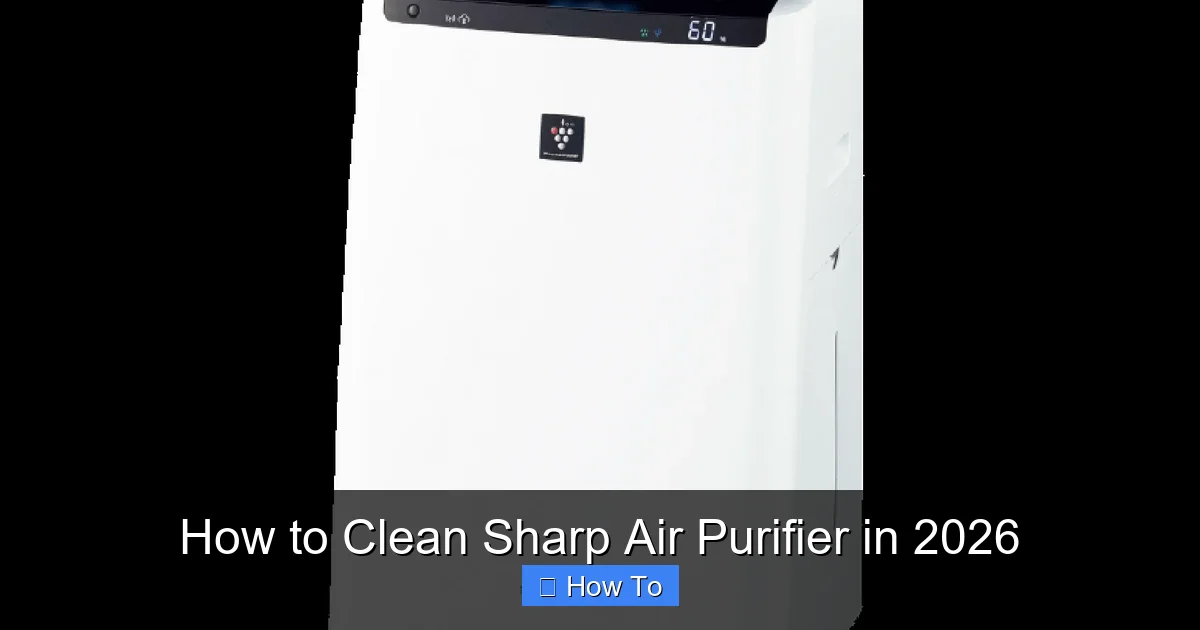
Visual guide about how to clean sharp air purifier
Image source: my.sharp
- Don’t clean too often. Over-cleaning can wear out filters prematurely. Stick to every 2–4 weeks for pre-filters and every 3–6 months for deep cleans.
- Avoid bleach or disinfectant sprays. They can corrode plastic and leave harmful residues. Stick to vinegar or mild soap.
- Never run the purifier without filters. It might seem harmless, but unfiltered air can damage the motor and reduce lifespan.
- Check for recalls or firmware updates. Sharp occasionally releases software updates for smart models (like the KC-G60-W). Visit their support site to stay current.
- Use genuine Sharp replacement filters. Third-party filters may fit, but they often lack the same filtration efficiency and can void your warranty.
Real talk: I once used a generic HEPA filter to save money. Within a month, my allergies flared up again. Sharp’s filters are engineered for their specific airflow systems—cheaping out isn’t worth it.
Also, keep a cleaning log! Note the date you cleaned or replaced each filter. It’s easy to forget, especially if you have multiple units (like one in the bedroom and another in the living room).
FAQs About How to Clean Sharp Air Purifier in 2026
Q: How often should I clean my Sharp air purifier?
A: It depends! For most homes, clean the pre-filter every 2–4 weeks and do a full deep clean every 3–6 months. If you have pets, smoke indoors, or live in a dusty area, clean more often—maybe weekly for the pre-filter.
Q: Can I wash the HEPA filter in my Sharp purifier?
A: Only if it’s labeled “washable.” Most Sharp HEPA filters are not meant to get wet. Check your manual or the filter itself. When in doubt, stick to vacuuming.
Q: My purifier smells musty after cleaning. What’s wrong?
A: That’s usually mold or mildew from moisture trapped in the filter or tank. Make sure everything is 100% dry before reassembling. For stubborn odors, wipe the interior with a vinegar solution and run the purifier with the windows open for a few hours.
Q: Do I need to clean the Plasmacluster ion emitter?
A: Yes! On models with Plasmacluster technology (like the KC series), the ion emitter can collect dust. Use a dry cotton swab to gently clean the small metal pins every 3–6 months. Never use water—it can short-circuit the system.
Q: Can I clean my Sharp purifier with an ultrasonic cleaner?
A: Absolutely not. Ultrasonic cleaners use high-frequency vibrations that can destroy delicate filter media and electronic components. Stick to manual cleaning methods.
Q: What if my purifier still isn’t working well after cleaning?
A: First, double-check that all filters are properly installed and not expired. If performance is still poor, the motor or sensor may be failing. Contact Sharp customer support—many models come with a 1–5 year warranty.
Q: Is it okay to clean the purifier while it’s still warm?
A: No! Always wait until the unit is completely cool. Cleaning a warm purifier can warp plastic parts and increase the risk of burns or electric shock.
Final Thoughts
Cleaning your Sharp air purifier might not be the most exciting chore, but it’s one of the simplest ways to protect your health and your investment. By following this guide on how to clean Sharp air purifier in 2026, you’ll keep your unit running efficiently, extend its lifespan, and ensure your home’s air stays truly fresh.
Think of it like changing the oil in your car—you wouldn’t skip that, right? Same goes for your purifier. A little maintenance goes a long way.
So grab your microfiber cloth, unplug that unit, and give it the TLC it deserves. Your lungs (and your allergies) will thank you. And hey—if you’ve got a tip I didn’t cover, drop it in the comments. We’re all in this clean-air journey together.
“`