
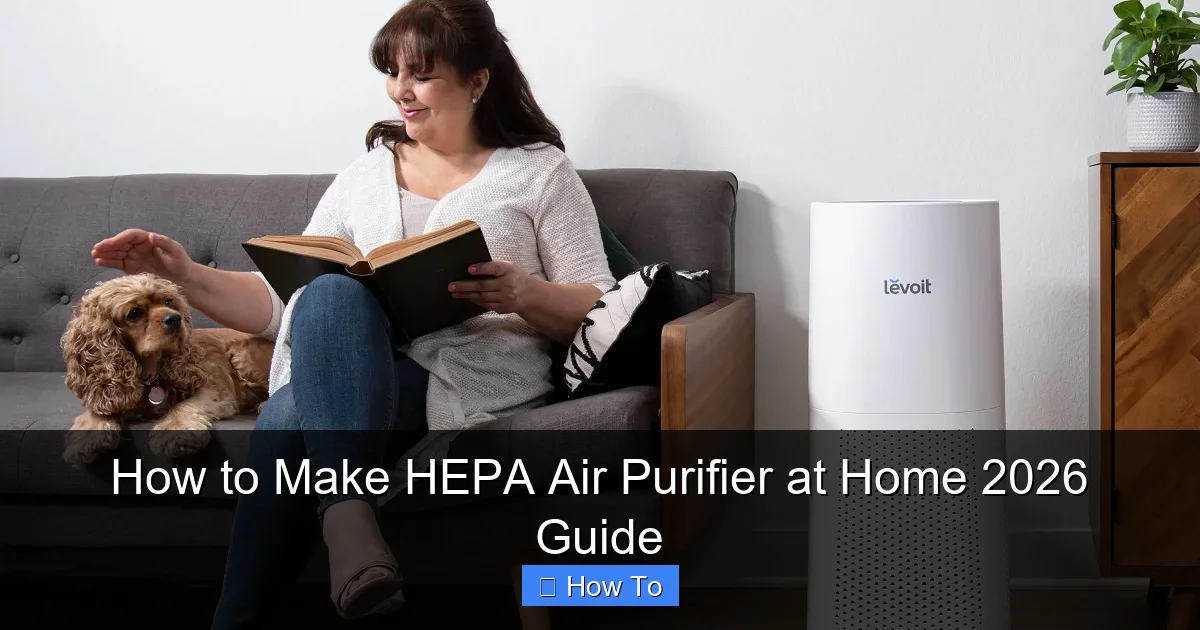
Build your own HEPA air purifier at home with simple, affordable materials and enjoy cleaner, healthier air in 2026. This DIY guide walks you through creating a high-efficiency filtration system using a box fan, a genuine HEPA filter, and basic tools—no advanced skills required. Save money, reduce indoor pollutants, and customize your purifier to fit any room with this easy, eco-friendly solution.
“`html
How to Make HEPA Air Purifier at Home 2026 Guide
Key Takeaways
- Use a true HEPA filter: ensures 99.97% of particles as small as 0.3 microns are captured.
- Seal all gaps tightly: prevents unfiltered air from bypassing the filter and reduces efficiency.
- Choose a high-CFM fan: moves air quickly for faster purification in larger rooms.
- Build a secure frame: keeps filter and fan aligned for optimal airflow and performance.
- Replace filters regularly: maintains effectiveness and prevents clogging over time.
- Test air quality before and after: confirms your DIY purifier is working effectively.
Why This Matters / Understanding the Problem
Let’s be honest—air quality isn’t something we think about until it’s too late. I remember one spring morning when my allergies kicked into overdrive. My eyes were itchy, my nose was running, and I couldn’t stop sneezing. That’s when I realized the air inside my home might be part of the problem.
Indoor air can be up to five times more polluted than outdoor air, according to the EPA. Dust, pollen, pet dander, mold spores, and even volatile organic compounds (VOCs) from cleaning products linger in our homes. And while commercial air purifiers can help, they’re often expensive—some costing hundreds of dollars.
That’s why I started exploring DIY solutions. I wanted clean air without breaking the bank. After some research and a few trial runs, I discovered that building your own HEPA air purifier at home is not only possible—it’s surprisingly effective. This How to Make HEPA Air Purifier at Home 2026 Guide walks you through the process step by step, using affordable, accessible materials.
Whether you’re dealing with seasonal allergies, living in a city with poor air quality, or just want to breathe easier, this project can make a real difference. Plus, it’s a fun weekend activity that gives you full control over your indoor environment.
What You Need
Before we dive into the build, let’s gather everything you’ll need. Don’t worry—most of these items are easy to find online or at your local hardware store. I’ve kept the list simple and budget-friendly.

Visual guide about how to make hepa air purifier
Image source: vaniman.com
- Box fan (12–20 inches): A standard household fan works perfectly. I used a 16-inch model I already had.
- True HEPA filter (same size as your fan): This is the heart of your purifier. Look for a filter rated H13 or higher for maximum efficiency. Avoid “HEPA-type” or “HEPA-like” filters—they don’t capture particles as effectively.
- Elastic straps, bungee cords, or zip ties: These will secure the filter to the fan. I prefer zip ties for a snug, permanent fit.
- Scissors or utility knife: For trimming excess material if needed.
- Measuring tape: To ensure the filter fits your fan properly.
- Optional: Duct tape or weather stripping: To seal gaps and improve airflow efficiency.
Total cost? Usually under $50—especially if you already own a fan. Compare that to a $200+ commercial unit, and the savings are clear.
One quick note: Always check the filter’s dimensions before buying. A filter that’s too small won’t seal properly, and one that’s too large won’t fit. Measure your fan’s front face (not the blade diameter) to get the right size.
Step-by-Step Guide to How to Make HEPA Air Purifier at Home 2026 Guide
Step 1: Choose the Right Fan and Filter
The foundation of your DIY air purifier is the fan and filter combo. I learned this the hard way—my first attempt used a tiny desk fan and a mismatched filter. The result? Weak airflow and barely any purification.
Visual guide about how to make hepa air purifier
Image source: secure.img1-cg.wfcdn.com
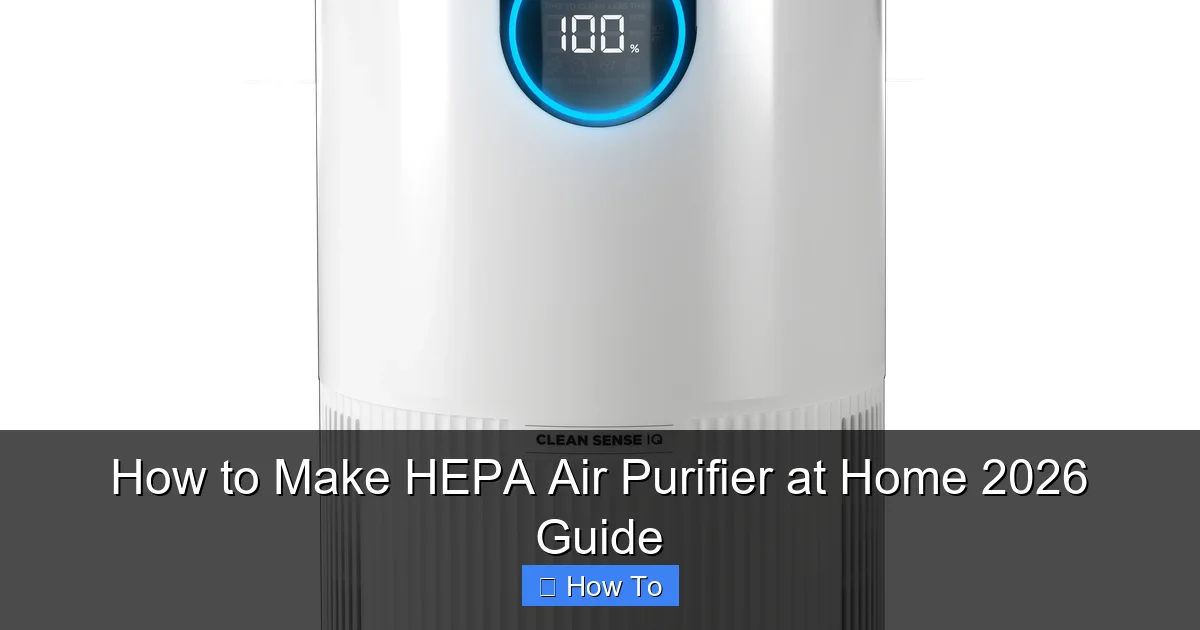
Start by selecting a box fan with a flat front panel. Most standard models work, but avoid curved or decorative designs—they make sealing difficult. A 16-inch fan is ideal for medium to large rooms, while a 12-inch version suits smaller spaces like bedrooms or offices.
Next, buy a true HEPA filter that matches your fan’s dimensions exactly. For example, if your fan is 16×16 inches, get a 16×16-inch HEPA filter. Brands like Honeywell, Filtrete, or even generic options from Amazon work well—just verify the MERV rating is 17 or higher (that’s what makes it “true HEPA”).
Pro tip: Some filters come with pre-attached gaskets or frames. If yours doesn’t, consider adding foam weather stripping around the edges later to minimize air leaks.
Step 2: Position the Filter Correctly
Now comes the fun part—attaching the filter. But first, direction matters. HEPA filters have an arrow on the frame indicating airflow direction. This arrow should point toward the fan, meaning the filter goes on the back of the fan (the side where air is pulled in).
Why? Because the fan pulls air through the filter, trapping contaminants before clean air blows out the front. If you mount it backward, you’re just blowing dirty air around—defeating the whole purpose.
Place the filter flat against the back of the fan, aligning the edges. Make sure the arrow points inward toward the motor. If the filter seems loose or wobbly, don’t worry—we’ll secure it in the next step.
Step 3: Secure the Filter to the Fan
This step ensures no air sneaks around the edges. I’ve tried a few methods, and zip ties are my go-to for durability and tightness.
Start by threading zip ties through the fan’s mesh guard and around the filter frame. Space them every 4–6 inches around the perimeter. Pull them snug—but not so tight that you warp the filter frame. Over-tightening can damage the filter media.
Alternatively, use elastic straps if you want a removable setup (great for cleaning or replacing the filter). Just loop them over the fan and under the filter, adjusting tension so the filter lies flat.
If you notice gaps between the filter and fan, especially at the corners, add a strip of foam weather stripping or use duct tape to seal them. Even small leaks reduce efficiency by letting unfiltered air bypass the HEPA layer.
Step 4: Test and Optimize Airflow
Once everything’s secured, plug in your fan and turn it on. Listen for unusual noises—rattling or flapping could mean the filter isn’t tight enough. Feel the airflow: you should notice a strong, consistent stream coming from the front.
To test effectiveness, try this simple trick: hold a tissue near the front of the fan. It should flutter steadily, indicating good airflow. If it barely moves, check for blockages or loose fittings.
For best results, run your DIY purifier on medium or high speed in rooms where you spend the most time—bedrooms, living rooms, or home offices. I run mine overnight while sleeping, and the difference in morning congestion is noticeable.
Optional upgrade: Place the purifier on a stable surface away from walls or furniture. This allows 360-degree air intake and maximizes circulation.
Step 5: Maintain Your DIY Air Purifier
Like any air-cleaning system, your homemade unit needs occasional upkeep. True HEPA filters aren’t washable—they trap particles deep within the fibers, so cleaning them with water or compressed air can ruin their structure.
Instead, replace the filter every 6–12 months, depending on usage and air quality. If you live in a dusty area or have pets, check it every 3–4 months. A clogged filter restricts airflow and reduces performance.
You’ll know it’s time to swap when the fan struggles to push air or when visible dust builds up on the surface. Most filters have a recommended lifespan printed on the packaging—stick to that timeline.
Also, wipe down the fan blades and exterior monthly with a damp cloth. Dust buildup on the fan itself can reduce efficiency and reintroduce particles into the air.
Pro Tips & Common Mistakes to Avoid
After building several versions and helping friends with their own, I’ve picked up a few golden rules—and seen some frequent missteps.
Visual guide about how to make hepa air purifier
Image source: m.media-amazon.com
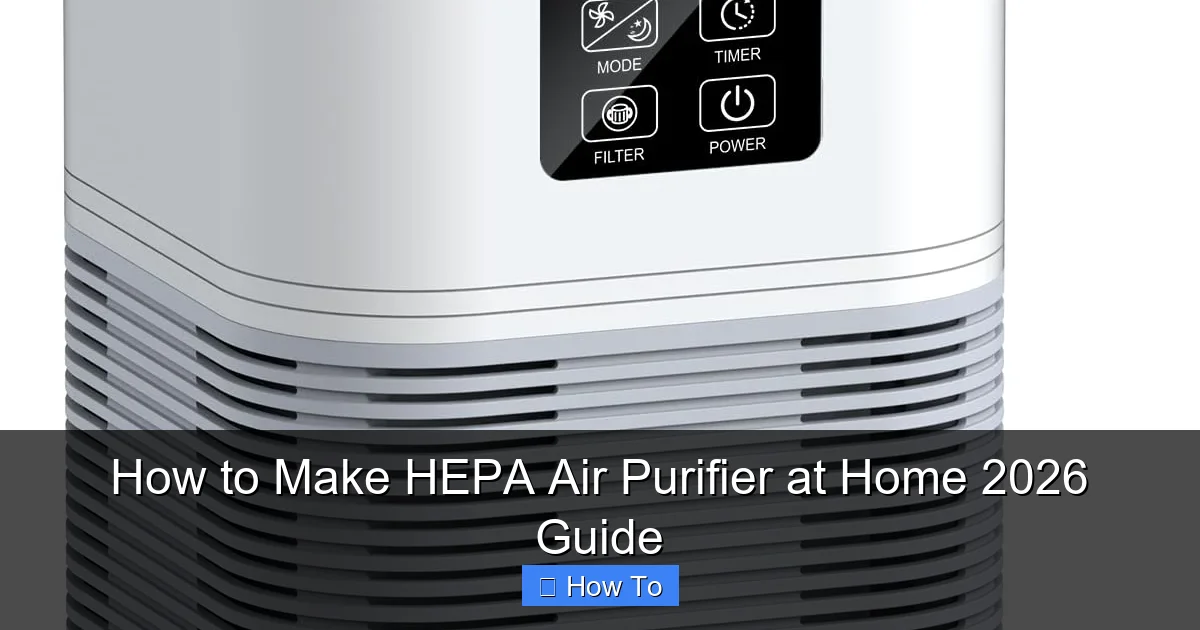
Pro Tip: Use a carbon-activated pre-filter if you’re dealing with odors or smoke. While HEPA captures particles, it doesn’t remove gases. Layering a thin carbon filter in front of the HEPA (between the fan and HEPA) can tackle cooking smells, pet odors, or wildfire smoke.
Warning: Never use a “HEPA-type” filter labeled as “99% efficient.” True HEPA must capture 99.97% of particles 0.3 microns in size. Marketing loopholes allow cheaper filters to claim “HEPA” status without meeting the standard. Always check for H13 or H14 certification.
Another common mistake? Mounting the filter on the front of the fan. Remember: air is pulled in from the back and blown out the front. Putting the filter on the wrong side means you’re just recirculating dirty air.
Also, avoid overloading your purifier with multiple filters unless you reinforce the setup. Stacking too many layers can strain the fan motor and cause overheating.
Finally, don’t expect hospital-grade results overnight. While your DIY unit won’t match high-end models with multiple stages and smart sensors, it’s remarkably effective for the price. In my 12×12 bedroom, it reduced dust noticeably within a week.
FAQs About How to Make HEPA Air Purifier at Home 2026 Guide
Q: How effective is a DIY HEPA air purifier compared to store-bought ones?
A: Surprisingly close! Studies (including one from the University of Colorado) show that properly built box-fan purifiers can remove over 90% of airborne particles in a room. They won’t have fancy features like auto mode or app control, but for core filtration, they’re highly effective—and far more affordable.
Q: Can I use this in a baby’s room or nursery?
A: Absolutely—as long as the fan is placed safely out of reach and on a stable surface. The purified air is gentle and free of harsh chemicals. Just ensure the filter is securely attached so little fingers can’t pull it loose.
Q: Will this help with COVID-19 or other viruses?
A: HEPA filters can capture virus-laden aerosols (since viruses often hitch rides on larger particles), which may reduce transmission risk in shared spaces. However, it’s not a substitute for ventilation, masks, or vaccination—it’s one layer of protection among many.
Q: How loud is it?
A: About as loud as the fan normally is. Most box fans are moderately noisy on high, but quieter on medium. I run mine on low at night and barely notice it. If noise is a concern, choose a fan with a “quiet” or “sleep” mode.
Q: Can I make a smaller version for my car or desk?
A: Technically yes, but effectiveness drops significantly. Car interiors have complex airflow, and small fans lack the power to circulate air thoroughly. For personal use at a desk, a mini USB purifier might be better—but it won’t have true HEPA filtration.
Q: What if my filter doesn’t fit perfectly?
A: Use foam tape or cardboard shims to fill gaps. The goal is to ensure all air passes through the filter—not around it. Even a 1/4-inch gap can cut efficiency by 20% or more.
Q: Is this safe to leave on all day?
A: Yes, as long as your fan is in good condition and not overheating. Modern box fans are designed for continuous use. Just keep it away from water and flammable materials, and replace the filter regularly to prevent motor strain.
Final Thoughts
Building your own HEPA air purifier isn’t just a cost-saving hack—it’s a practical way to take control of your indoor air quality. With just a fan, a true HEPA filter, and a few zip ties, you can create a device that significantly reduces allergens, dust, and other airborne irritants.
This How to Make HEPA Air Purifier at Home 2026 Guide proves that effective air cleaning doesn’t require a fancy brand name or a four-figure price tag. It’s about understanding how air moves, choosing the right materials, and maintaining your setup consistently.
So go ahead—give it a try. Your lungs (and your sinuses) will thank you. And if you run into issues? Double-check the filter direction, seal those gaps, and remember: simplicity often works best. Breathe easy, friend.
“`